
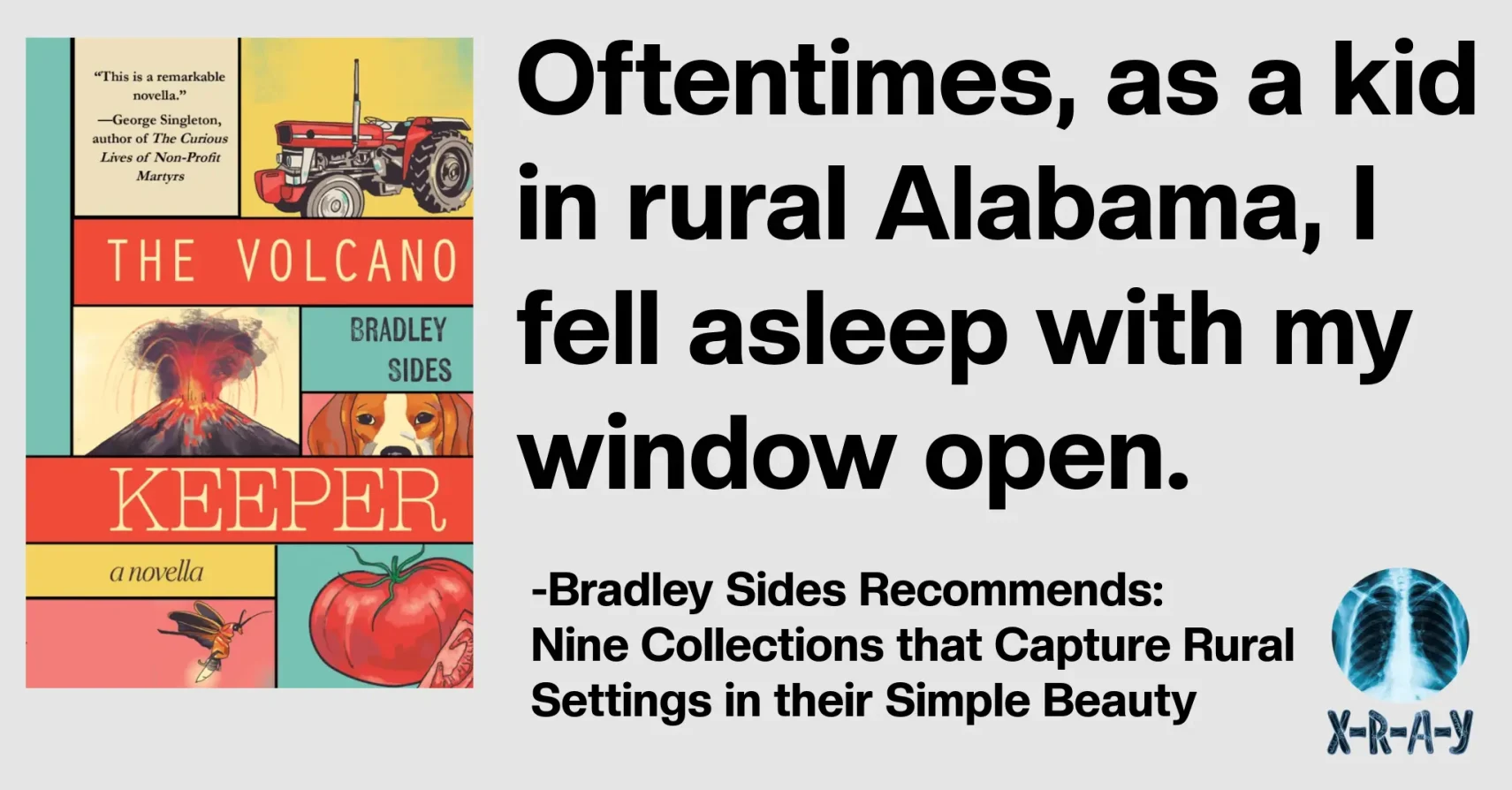
Oftentimes, as a kid in rural Alabama, I fell asleep with my window open. I could hear a mix of cows mooing, frogs croaking, and creeks flowing. It was the best sound machine I’ve ever had. The days were just as pleasant. I swam in ponds, gave show cows baths, and hung out with my grandfather in his expansive garden. Each day was brimming with the natural beauty of the rural world.
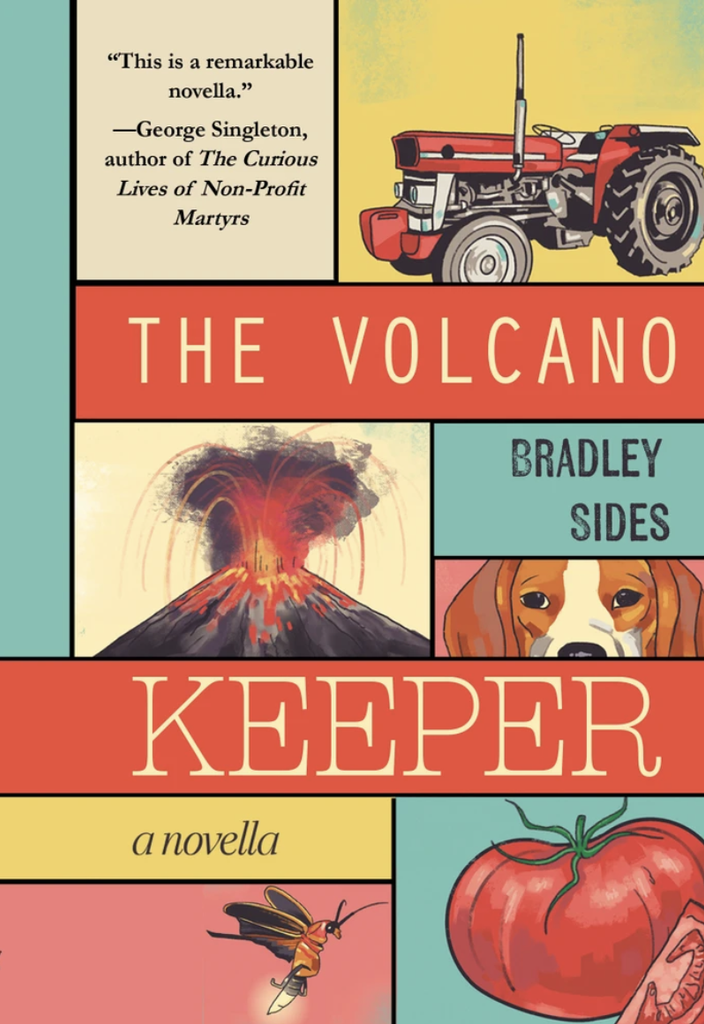
In my debut novella, The Volcano Keeper (Regal House, 2026), I plant my characters in a fictionalized rural Alabama community that is similar to the one I’m from. Charlie Melvin and his family tend to their land, a former cattle pasture that they use for hay, and gardening. A young Charlie and his cousin catch minnows in the creek and collect lightning bugs in Mason jars with holes poked through the lid. They harvest watermelons. They find solace in dogs. They sit together on the porch – and laugh and gossip and love.
If the simple beauty of a rural setting is what you might be looking for in your next read, here are a few books I recommend:
Jesse Graves’ Merciful Days (Mercer University Press, 2020)
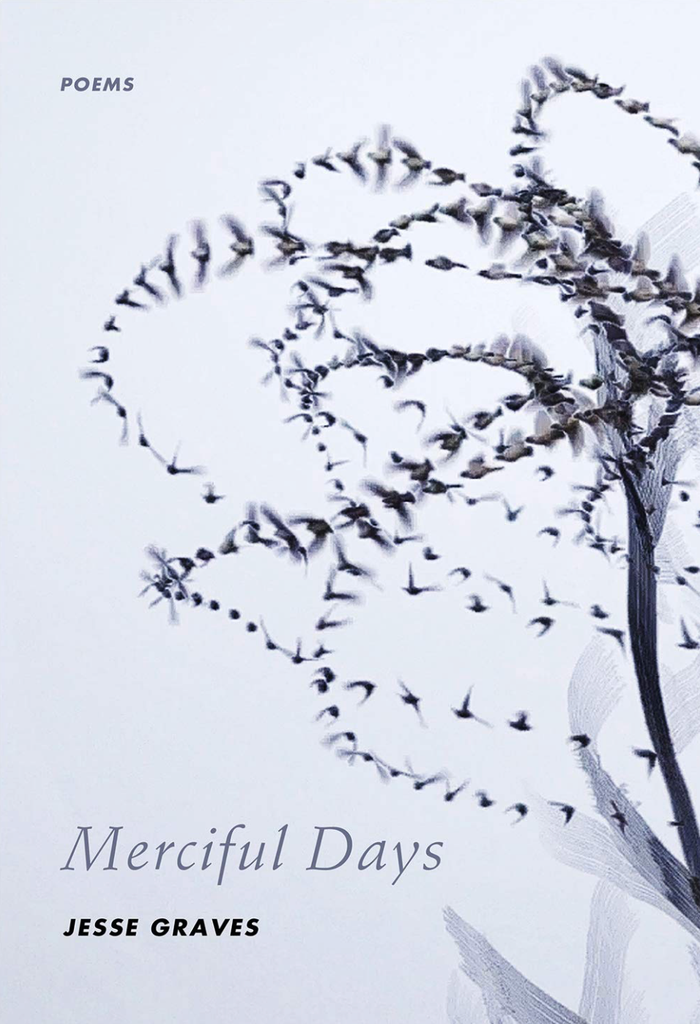
When I read the poetry of Tennessee-based writer Jesse Graves, I am home, and I full-heartedly mean that. Graves tenderly and beautifully paints scenes of the world I grew up in. He captures farm life and all of its complexities, showcasing tractors getting stuck in mud and bulls jumping fences. He tells stories of people I remember – and people I still know and people I am. Start with “A Blue Tractor Passing.” Merciful Days is one of those very few books I share with everybody.
Andrew Siegrist’s We Imagined It Was Rain (Hub City, 2021)
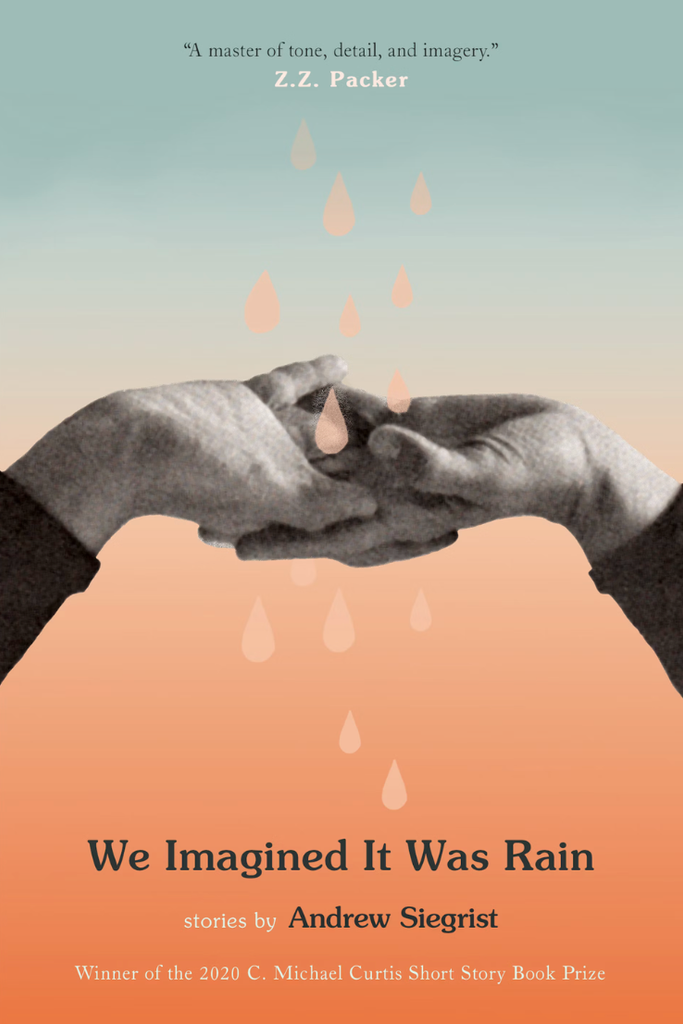
I’m back in Tennessee for this recommendation. Siegrist mostly sets his short stories in the Volunteer State, and from the opening works, it’s clear that the author will establish the magic and the mythic of the place he knows so well. There are images conjured of the natural world within these pages that leave me almost breathless. Read “Rainpainting,” and you’ll see what I mean. In one of my favorite moments, Siegrist gives us this fantastic description:
We ran in circles beneath sheets that were hung between branches so high above us. Each sheet stained a different color. We outstretched our arms, our palms catching all different colors of rain. The strange rain dripped from our hair and down our faces. Red and blues and purples. We opened our mouths and tasted it.
Be warned: You won’t be able to stop with just this one story…
Julia Elliott’s Hellions (Tin House, 2025)
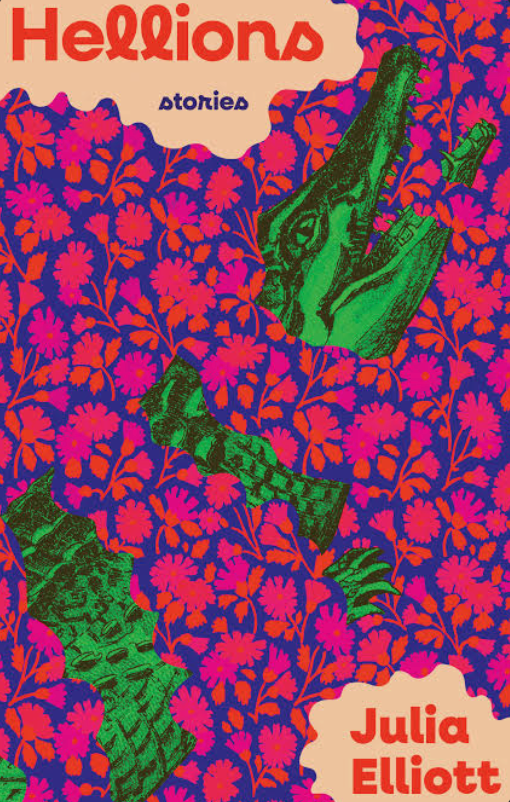
Here’s the thing with Elliott’s writing: It is atmospheric, atmospheric, atmospheric! When I first read these stories, which are oftentimes (but definitely not always) set in rural South Carolina and during the summer, I kept thinking of my own humid evenings back in Alabama. “Hellion” and “The Maiden” are my favorites. They absolutely deliver the unrivaled outdoor energy and feeling of the rural world.
Denton Loving’s Tamp (Mercer University Press, 2023)
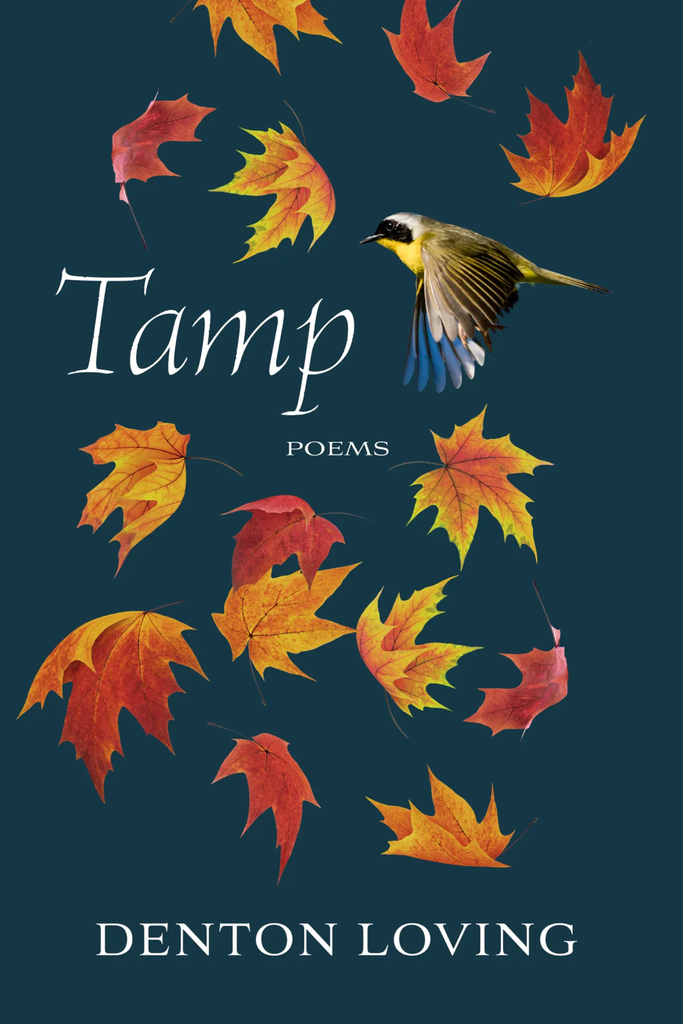
Tamp is a mighty fine collection of poems. Everyone I pass it to devours it. Ask my book club for proof. Truly, Tamp is brimming with the rural world I know, with barns and hay and dirt and so much more. “There is a barn” gets me each and every time I revisit it. In one of my favorite series of lines, Loving writes,
The man who packed the hay picked the paint / though there were red barns in his history. / Perhaps the barn’s color doesn’t matter / except to me because the man was my father.
Loving’s book is full of exquisite rural wonders.
Randall Kenan’s If I Had Two Wings (W. W. Norton Company, 2020)
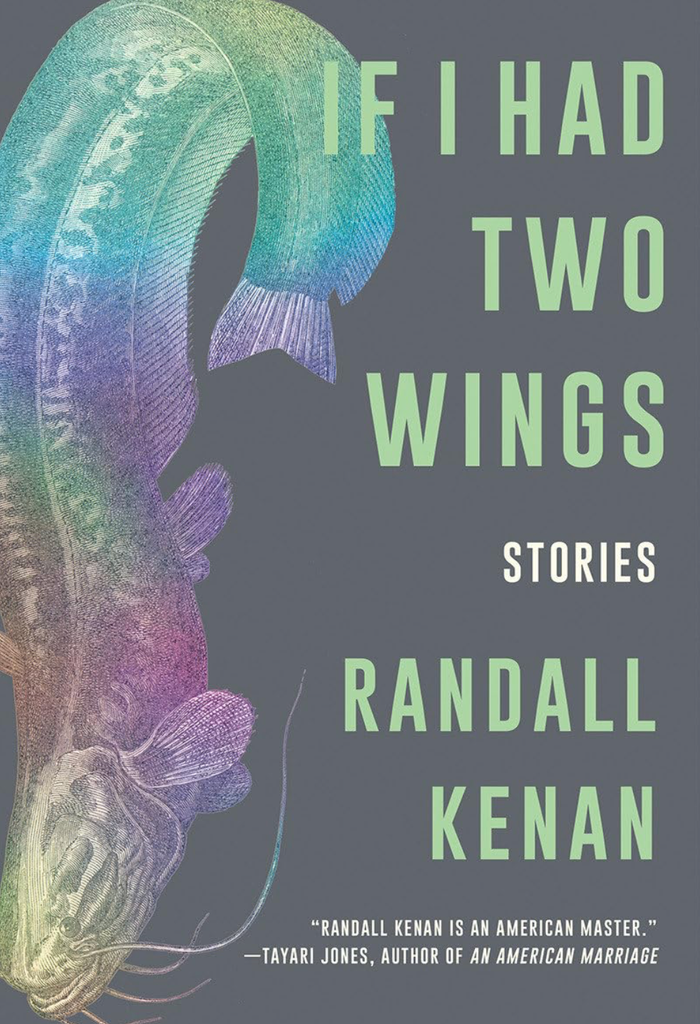
Randall Kenan, throughout his remarkable career, gave the rural South some much-appreciated magic. Set largely in his fictional community of Tims Creek, North Carolina, this brilliant book gives us delicious butter beans, a troublesome hog, and much, much more. For a place to begin, I suggest “Now Why Come That Is?” or “The Acts of Velmajean Swearington Hoyt and the New City of God.” Both display the beloved author at his very best.
Ashleigh Bryant Phillips’ Sleepovers (Hub City, 2020)
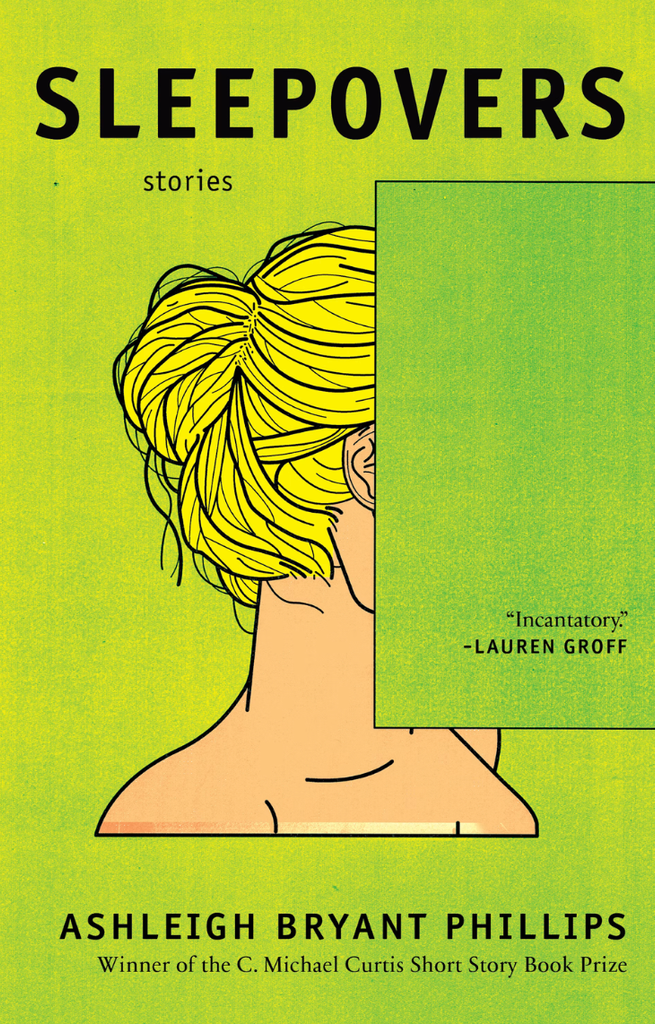
My introduction to Phillips’ writing was when I came across a YouTube video of the author reading her story “Shania.” With just that one story, I figured her writing would be for me, and I was right. While Phillips knocks it out of the park again and again in her debut collection, it’s “The Bear” that takes me home the most. There is fly swatting, porch sitting, creeks running dry, a bear in the pasture, and more. It’s wonderful!
Crystal Wilkinson’s Blackberries, Blackberries (Toby Press, 2020. reissue University Press of Kentucky, 2017)
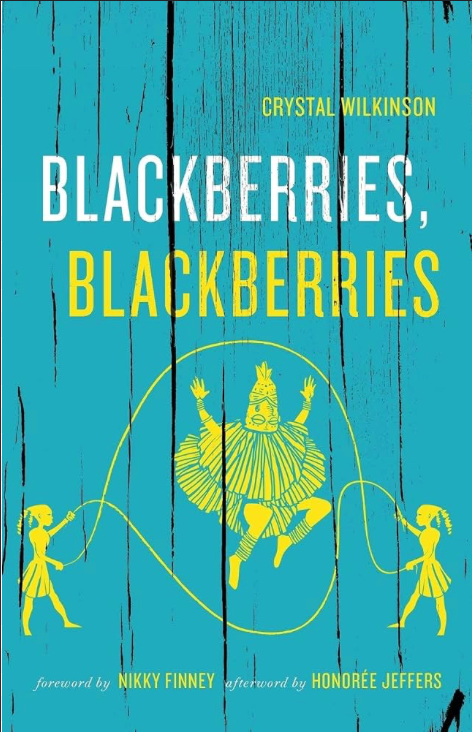
I’m a long-time fan of Crystal Wilkinson’s writing. My favorite from her is a two-page gem titled “The Wonderer” found in her story collection from 2017. While it so affectingly explores identity and self, it also captures rural wonders with such vivid and powerful images, and the story does this over and over again. “The Wonderer” opens like this:
Many a night Javeda would lie on her back and be lulled by katydids and whippoorwills speaking to one another in the pitch of the Casey Creek night.
Later on, there is
a mason jar full of lighting bugs.
The start of “The Wonderer” reminds me of my own youthful nights. With no blinds and the window often cracked, I had bullfrogs croaking and splashing in the distance, with lightning bugs and stars illuminating the dark sky.
Robert Busby’s Bodock (Hub City, 2025)
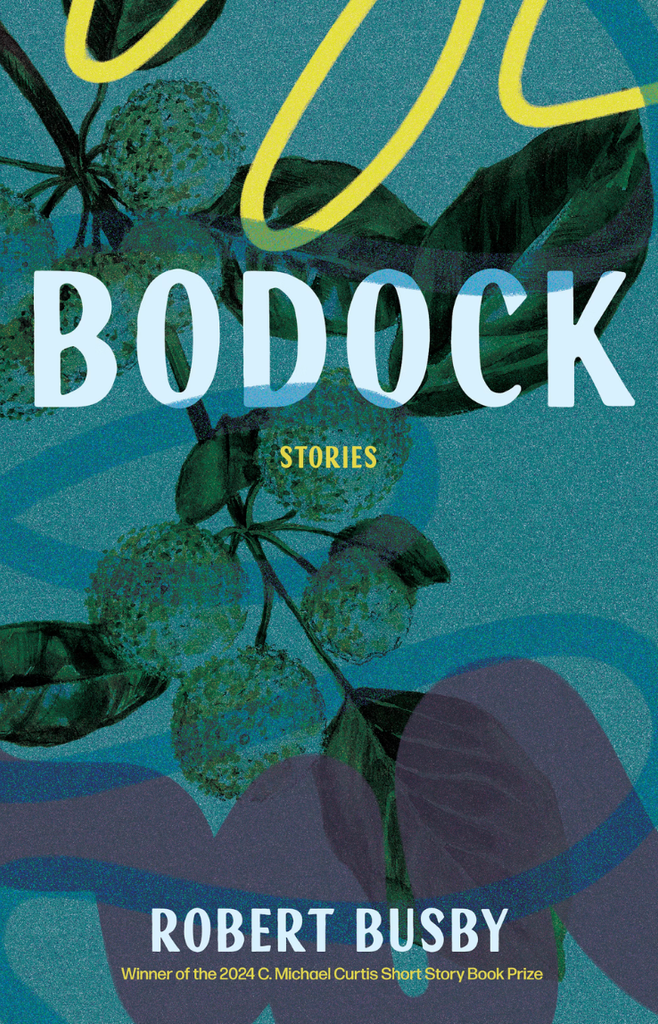
Robert Busby’s excellent debut collection of stories is set around an ice storm in Bodock, Mississippi, in the 1990s. From the first story, this collection brilliantly showcases rural wonders. Many of my favorite images involve trees. I love these lines from the standout “Twenty Mile”:
Sleet packed the tree’s limbs and the limbs converged into a pair of boughs that plaited around the trunk and drove into the dry red clay. Horse apples glazed with ice dangled from the bois d’arc and the bug zapper hummed blue light against the glaze of ice.
As I read Bodock, I kept thinking of Ron Rash and Brad Watson. Yeah, it’s that good. I also thought of my own experiences in north Alabama, as a kid, as we dealt with a couple of crippling ice storms. It was a tough time, but there was also beauty to be found during it.
Silas House’s All These Ghosts (Blair, 2025)
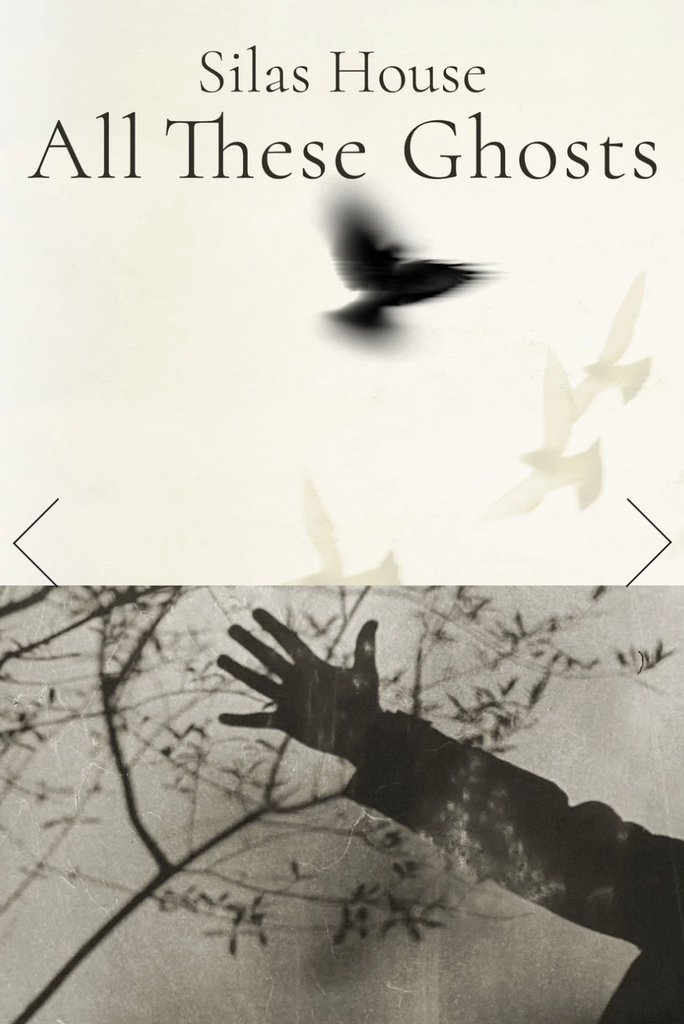
One of the best classroom experiences I’ve ever experienced in a decade and a half of teaching stories was when I first brought in House’s first collection of poems. My goodness. These poems made us all remember. We talked about the land and how so many of our lives’ most important moments were set to the sights and sounds of the natural world, just like we see in this wonderful book. A standout is “Dale Hollow Lake, 1989.” In this poem, readers are transported to a nostalgic lake visit with a group of beloved cousins. There are so many others here that showcase rural beauty. “Timesickness,” for example, opens in a garden, as children search, with lanterns, for summer nightcrawlers. “For My Dog” closes with one of life’s best scenes: a man and his dog at the creek, reading and dozing. Read it, and share it.
Bradley Sides is the author of two previous short story collections, Those Fantastic Lives and Crocodile Tears Didn’t Cause the Flood, a 2024 Book of the Year finalist at Southern Literary Review. His writing appears at Chapter 16, Electric Literature, LeVar Burton Reads, Los Angeles Review of Books, The Millions, The Rumpus, and Southern Review of Books, where he also serves as the host of “The Southern Summer Book Club.” He lives in Madison, Alabama, with his wife, and, on most days, he can be found teaching writing and literature at Calhoun Community College. His latest book is The Volcano Keeper.