
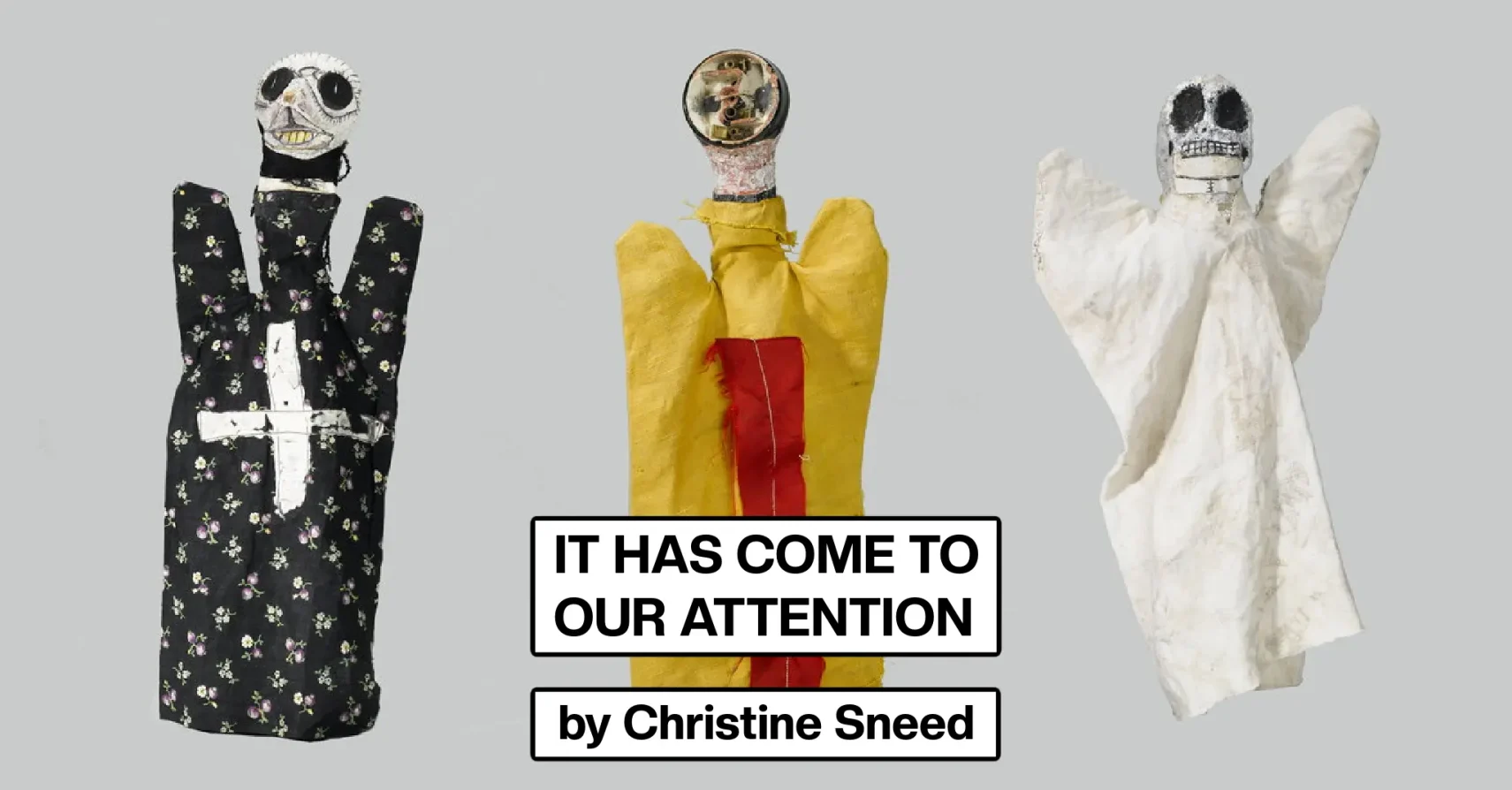
For many years, so many we have lost count, a Stairmaster has occupied this room, an unsightly apparatus left to gather dust after a (short-lived) period of committed use, its panels and planks fading in the sun, the curtains on the window it faces left open as often as not by the owner of this room and the many adjoining rooms. The window once overlooked a sycamore tree, but it was chopped down by sullen men in gray jackets who arrived early one morning before the first snowfall of the waning year.
We were not expecting this uproar, nor could we believe how quickly the tree was undone. The stump is still out there, and when we see small birds roosting on its weathered edges, robins and finches, the occasional towhee and dark-eyed junco, we feel in these moments slightly less aggrieved about the sycamore’s fate. We are always so happy when the birds come. They know we’re here, peering out at them, but they don’t seem to mind.
It would lift our spirits further if one of them landed on the window ledge and looked in on us as we are looking out at them, but they have their own avian prerogatives and preoccupations. (This is what one of us likes to say, in any case, and whether we agree with this presumption or not, we have not aired our objections.)
Before the Stairmaster, this room held a child’s bed, a dresser made of oak by the child’s grandfather, and toys in a box also made of oak by the grandfather. The child had a habit of extracting every one of his toys from the box and leaving them on the floor in stunning disarray when he had finished amusing himself. We’d often speculate whether the child’s mother would appear and place the toys in the box again or if the child’s father would stalk into the room and argue with the child, whereupon we’d soon be unwilling witnesses to much sulking and foot-stomping, and on occasion, sobbing. These tantrums were, without exception, to our relief, followed by a long, still night of deep sleep, so deep we could enter the child’s dreams and see the shapes and hear the voices he was hearing too.
Before the oak toy box and dresser, this room contained a cradle, not the cradle of the child with the toys and the temper. No, a different child. This child’s father sometimes slipped into the the room very late at night, so late it was almost morning, and stared down with pained love at the child who was so young its mouth could not yet form words. The child’s mother came to the room less often than the father did, whether it was night or day. This mother was not a mother in the sense we had always understood a mother aspired to be, or, as one of us has argued (not the same one of us who claims to be an armchair bird behaviorist), is told a mother must aspire to be.
With increasing frequency, we heard the father exchanging unflattering words with the mother until one day the father took the child and did not return, leaving the cradle behind. The mother began sleeping in this room beneath the cradle on a nest she made of blankets, a practice we found troubling but of course we were powerless to comfort her. One of us considered scaring her out of the room, but when we voted on it, there was only one vote in favor, four against.
We are not that sort, we all agreed, except for the one who voted in favor, but this one of us has always been a mischief maker and a stick-in-the-spokes’r, and during the twenty-odd years she spent in the world of birds and trees, she met her end when planning a foolhardy prank on her betrothed, who we must assume was something of a simpleton, considering whom he’d chosen for his bride. The prank involved a large bucket of water placed high above a household doorway. While rigging the iron bucket for this ill-planned prank, it fell from its perch and clocked the one of us firmly on the head and sent her swiftly to this place between the world of trees and birds and the far-beyond world (so mysterious, even to us, as is the question of whether we will ever be permitted to enter it). We were already in residence in this room, in this in-between place, and before we knew her well enough to form an educated opinion, we allowed her to join our company, and here she remains, our albatross, we suppose, our cross to bear.
As (another) one of us likes to say, having picked up this lamentable phrase from the current owner of this room and its adjoining rooms, “It is what it is.”
Before the cradle, this room was crowded with wooden crates containing jars with plums and peaches, dill pickles and sauerkraut, purple beets and tiny corns, raspberry jelly and strawberry jam. There were burlap sacks of potatoes and yams, of bread flour and millet and cornmeal—until the rats came, which did not happen as quickly as some of us assumed it would. When the rats came, the owner of this room tried to shoot these dark, scurrying creatures, a measure we would have advised against if we had been consulted (which, alas, was an impossibility).
We knew it was an execrable scheme. The bullets ricocheted off the walls and killed the owner, his poor wife screaming and rending her garments in a biblical fashion, jars bursting open all over the room, and such a mess it was, a crime scene, if we’re speaking candidly—human and rat blood commingling with shards of glass and ruined food, and most of the rats still alive and skittering about and squeaking in maniacal alarm. We were not in our most stoical form either, let us tell you, but what could we do but witness this horror and shake our proverbial heads? Even the inept prankster among us agreed it was a calamitous situation, and the owners should have known better—even a child of average intelligence would foresee that firing a pistol in a small room filled to brimming with fragile objects and quick-witted rodents was a deeply ignorant undertaking.
Before the wooden crates and flour sacks and jars of preserves so pretty they could have been sold at a mid-summer fair (a high-spirited gathering we miss from our years in the world of birds and trees), this room was mostly empty, its only occupants a few narrow bolts of cloth meant to be transformed into blouses and britches, but never were, not in this room or any adjoining room, as far as we know. For a time, a chair and a stand with sheet music clipped to it were the only other earthly occupants of this room, the bolts of cloth corralled into a corner by the cellist who appeared every morning (for such a long succession of days we began to wonder if he would always be with us, and if, in fact, he was one of us too). He played his scales and wrote his own compositions in between gazing out the window at the sycamore, which was very young then, a sapling that grew and grew with each subsequent season of sun and snow.
But of course the cellist did not stay with us forever. Before him, we are not sure what the room held, as three of us arrived when he was already here, and the other two of us arrived during the era of the rats and the fool with the pistol.
Why are we recounting these stories, we imagine you are wondering. And how long have we been occupants of this room we’re describing with such specificity and in some cases, affection? So long, so long we have lost count of the years we’ve passed in this in-between place.
We will be frank with you. It has come to our attention that the owner of the Stairmaster and this room and all adjoining rooms is selling them. This room will no longer be our refuge from the snow and rain. From out there where we never venture, except when one of us slipped into the elements late one night, due to a petty disagreement with the rest of us (you can guess who it was), over a matter we do not now remember. She didn’t return for so long we assumed she never would. (She became lost in the wilderness just beyond our sightlines, until a squirrel foraging for nuts and other foodstuffs, a creature she recognized as a resident of the sycamore’s high branches, led her back.)
The owner of the Stairmaster and this room and all the adjoining rooms isn’t selling them to a person whose appendages include a spouse and progeny. No, he has sold it to a commercial entity inscrutably known as Dyco Industries. Soon our room (and all adjoining rooms) will be demolished and replaced with a hulking structure meant to hold many discrete but linked spaces for commerce. We have overheard men talking outside our window. We know what is in their hearts and minds, whether we want to or not. We know their secrets, which are disappointingly bland, although they have no idea this is so.
Each linked space will contain numerous glaring lights and shelves stocked with objects of questionable utility and value. These objects will not be made from stones or glass or metal. They will mostly be fashioned from slippery materials that never decompose. We have looked out upon these materials through the window, snagged in our erstwhile sycamore’s branches, insinuated into piles of decaying leaves—so many forms and manifestations of these unholy materials—Satan’s resin, one of us, the bookworm among us, believes they have been called in some quarters. We have overheard the former occupants of this room and adjoining rooms alternately decrying and praising these materials in their conversations and arguments.
We do not know what will happen to us if this room ceases to exist. Will we be separated, forced against our will into configurations of other displaced and disbanded (and we must assume, grimly dispirited) souls? Or will we no longer exist at all? It is a frightening prospect.
Consider this our petition for leniency, for amnesty. Save us. Please. We cannot yet see all of what is coming, but we feel it. We know that you do too.
Christine Sneed is the author most recently of Please Be Advised: A Novel in Memos, The Virginity of Famous Men, and Direct Sunlight: Stories. Her work has appeared in publications such as Boulevard, Ploughshares, Story, New England Review, The Best American Short Stories, and The O. Henry Prize Stories. She has received AWP’s Grace Paley Prize in Short Fiction, the Chicago Writers Association Book of the Year Award, among other honors, and has been a finalist for the L.A. Times Book Prize. She teaches for Northwestern University and Stanford Continuing Studies and lives in Pasadena, California.