
Your mother found the place on the website that back then seemed so novel and now is considered low-key evil. “It’s on the second floor,” she’d said. “They say there’s no elevator but that shouldn’t be a problem.”
As the two of you roll your bags through the streets of Brighton, you notice other people moving in festive clumps. Someone told you at some point that Brighton was a party town, a fun fact you had forgotten until just now. You and your mother are wrecked from the red-eye, and as you follow the map on your phone, leading you in the same direction as the party goers, toward the sea, you worry that the raucous city might make it difficult to sleep.
The flat is on the third floor—in Europe, you will quickly learn, the first floor is considered the zeroeth floor—and the steps are narrow and steep. When you get into the apartment your shirt is sticking to your back. You told your mother you’d go down for the second heavy bag, but you hear a thunk and see that she’s carried it up herself. You feel bad.
You long for a shower the way you long for a drink of cold water. The tap water comes out cold and clean, but there’s no shower, just a tub. “Take a bath,” your mother says, and you can hear the way she used to say, “Time for bathy!” when you were little. But a bath is not what you want. You fantasize about a flow of water washing away the crud. The idea of stewing in it is gross.
“Come look,” your mother says, having figured out how to open the doors to the small balcony. From the road, you had been able to see a small sliver of the sea, but now it spreads out below the city like a rough sheet of gunmetal. The Victorian pier pirouettes out into the water. The chatter of a seaside city on a warmish day makes its way up to your ears. You squint and try to think of this place as home, since it’s about to be.
“What would you like to do?” she asks. You say that you need to take a nap. There’s only one bedroom, which she will take, but for now she tells you to go lie down. “But don’t sleep for too long or you’ll never be able to sleep tonight.” You set a timer on your phone for 42 minutes, which you think is the longest you can nap without falling into REM sleep. With the jet lag, though, you seem to enter deep sleep immediately, in a way that feels too good to resist. When the alarm goes off, it takes almost a full minute to penetrate your unconscious. You sit up and blink, both aware and being not entirely sure of where you are. The sun is in the wrong place, as far as your body is concerned.
You stumble back into the living room, where your mother is flipping through a local guidebook.
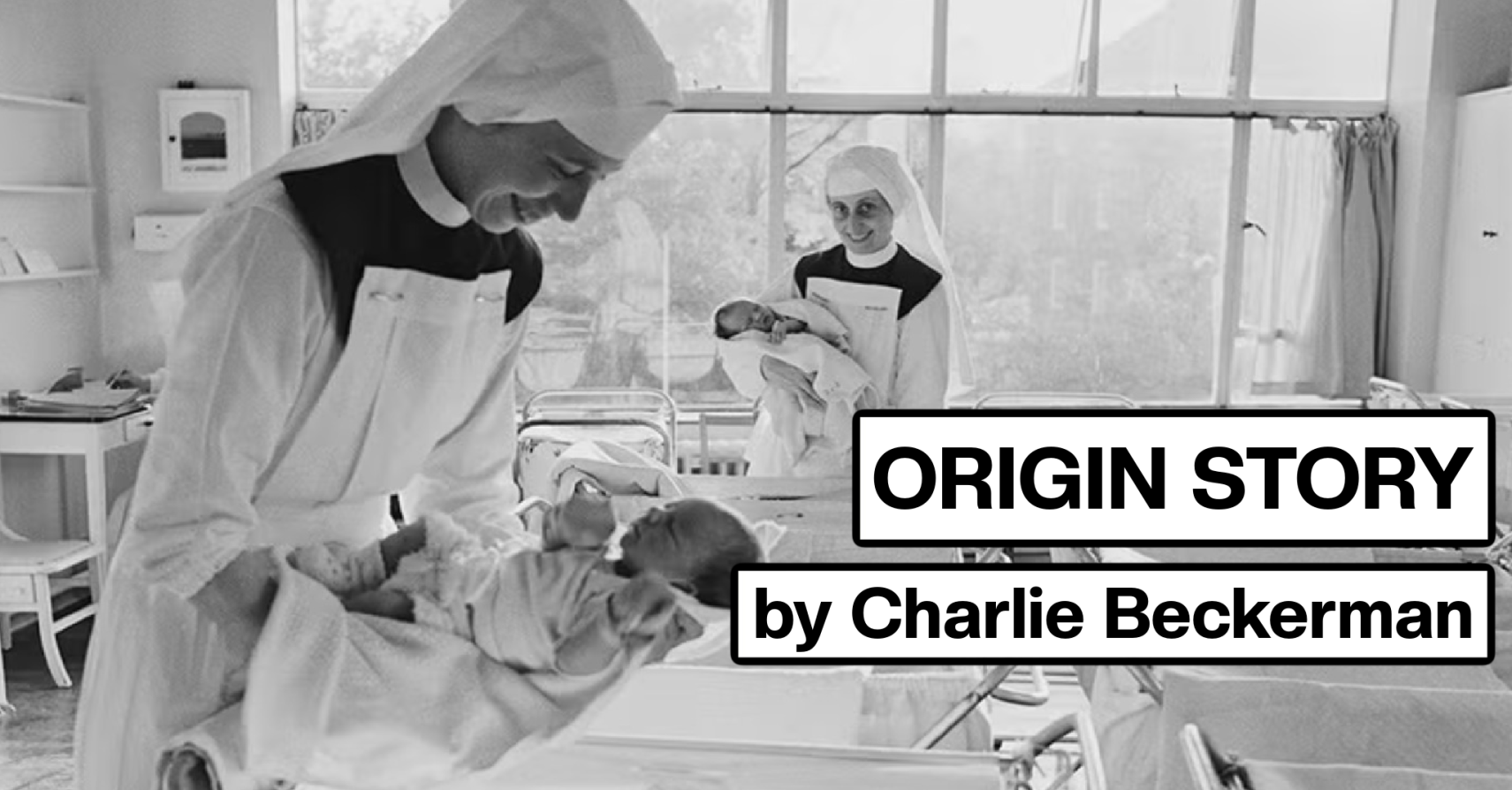
“Apparently this building used to be a home for pregnant girls back in the 19th century,” she says, and reaches down to the coffee table to pick up a book, the kind you could get bound at Kinko’s, or whatever it’s called now. “There’s a pretty interesting little write-up in here.” You hold the book in your hands and open it to this passage:
Providing her recollections to oral historians in the 1950s, Abigail Telford of Poplar, London, recalled the conditions of the home:
‘I hadn’t realized my mother had been tracking my monthly so closely. Even I hadn’t been that worried when I missed one—it had happened before—and I hadn’t yet developed any of the usual telltale signs, or none I recognized as such anyway, but my mother seemed to know. I had been working at the pottery as a cleaner, that’s where I met James. Oh, my mother never liked him. “Green eyes aren’t natural,” she’d say, but I couldn’t look away. When we finally, you know… I don’t think I really understood what was going on, even though now it’s plain as day. One morning I woke up to go to work only to find my mother standing over my bed holding a carpet bag in her hands. She just said, “Get ready, Abigail,” which she never called me, always Abby, except for that one time, as far as I can recall. I got ready and we got on a train to London and then to Brighton. It wasn’t my first time on a train nor my first time in London but it was my first time seeing the sea. The sun lighting up the waves. My mother walked slightly ahead of me through the streets. I have no clue how she knew where to go, she certainly never looked at a map. Finally, we got to the front door of a house and she knocked with this big door knocker and the Mother Superior answered the door and just nodded and indicated that I was to follow her. Mind you, I still had no idea what was going on but I knew I was in trouble. The Mother Superior walked first, then me, then my mother, as if they were worried I might try to run away. We got to her small office and the nun asked me if I knew why I was there. My mother started to say of course I did, but the Mother Superior silenced her with a palm, her arthritic hand unable to flatten fully. I shook my head. “You’re going to have a baby,” she said. I laughed. I looked at my mother to see if she was somehow in on this joke, but her face was dead serious, and she didn’t look back at me. I protested, even as I realized it was true. The Mother Superior told me that my mother had arranged for me to stay with the order until the baby was born. She said something about sin but also that every child is a gift from God. I barely knew what was going on, and then, suddenly, my mother was gone, and I was being shown to my room.
Well, I say, “my room” but really it was a room I shared with nine other girls, all of a similar disposition, though at different points on their journey. Another girl who was just starting to show was tasked with getting me settled. Her name was Mary Price and we became fast friends. To make money, the nuns ran a laundry which we were expected to work at until our condition prevented us, and even then we were given mountains of clothing to fold while in bed. The nuns were not warm, but they were not cruel, most of the time. In my seventh month I was feeling particularly rotten, with heartburn like you would not believe, and the hot laundry would make things worse, and one day I asked to be able to rest. This older nun, Sister Mary Michael, I think her name was, said that the Lord favors industry. I’ve never been very religious, and I called her an impolite name, and she slapped me across the face. But that was the worst of it.
The worst of it from them, anyway. Mary was a few months farther along than me, and when she went into labour, I begged to go with her. But the doctor wouldn’t allow it. Mary didn’t survive the birth, nor her baby. I was bereft, and also terrified. I hadn’t gotten on well with any of the other girls and the idea of giving birth alone gave me nightmares. In the end, when it happened, my mother returned and held my hand through it all, though the doctor protested and the nuns clucked their disapproval. I gave birth to a boy, but I never even got to hold him. A week later my mother took me back home and my life resumed as if I’d only gone away for a short while. I don’t think on my time at the home as good or bad, but sometimes, I can’t help but wonder where that boy is, and if he is doing okay.’
You put the book down and look over at your mother who is leafing through a copy of Time Out Brighton. “This restaurant is the place that makes vegetarians say, ‘Oh, god,’” she reads. Your recent conversion to vegetarianism is still novel to her, and she sometimes worries when you eat out that there won’t be anything on the menu for you. “Should we go?”
“Absolutely,” you say.
“Oh, god,” you say as your take your first bite. You’ve ordered a sampler platter of the restaurant’s signature dishes (savory churros with nori and miso mayo; small parcels stuffed with paneer and daal), the kind of vegetarian food that is so rich that by the end you feel overstuffed. You’re glad when the two of you get a little lost in the narrow winding alleys of the Laines, making your walk home longer than necessary. In one twisting stretch, the second (first?) stories of the buildings leaning over the two of you, like relatives gazing at a newborn in a bassinet, she asks if you’re okay. It happens just as you find yourselves amidst several jewelry shops, closed for business, their velvet pillows emptied of their diamonds and gold. “Yeah,” you say, curious if you’ve done something that’s made her worry. “You?”
“Are you kidding?” It’s another one of those phrases where her intonation echoes out from your childhood, both rhetorical and a joke, even though your question was in earnest. You will not receive an answer, but also, you have.
When you get back to the flat you’re both exhausted, even though it’s only 8pm. Your mom says good night and goes to the bedroom, and you set yourself up on the futon in the living room. You can’t figure out how it unfolds but you’re tired enough that it doesn’t matter. You’ve left the balcony door open to try and get some air, and you hope the party people of Brighton won’t keep you up.
You sleep for some indeterminate amount of time and awaken to the busy orange glow of the sodium streetlights and the resigned complementary purple of the sky. It is here, lying on the futon, staring up at the eaved ceiling, that you first wonder if this is the room where the women lived. The room where they slept and incubated and labored and sweat and bled and gave birth. For a moment, you think you can hear their howls and moans. But the cacophony is coming from outside, and you step onto the balcony expecting to see drunken fistfights or club kids vibrating from too many drugs.
It’s the seagulls. Thousands of them, it seems. They cry and scream as they swoop onto rubbish bins and uncovered tips. They announce their dominance and never stop announcing it. You have heard people call this town a party town and a hippie town and a queer town but now you see it is a seagull town. And, perhaps for the first time, it starts to feel a little bit like home.
Charlie Beckerman lives in an attic in Cincinnati where he is pursuing his PhD in Fiction at the U of Cincy. His fiction has previously appeared in Glassworks and Quail Bell Magazine, and you can listen to two seasons of his memoir podcast Serial Dater on Apple Podcasts and Spotify. You can find him on Insta and Bluesky @chozzles, as well as at www.charliebeckerman.com. He would someday like to have a dog, and until then would like to pet your dog.