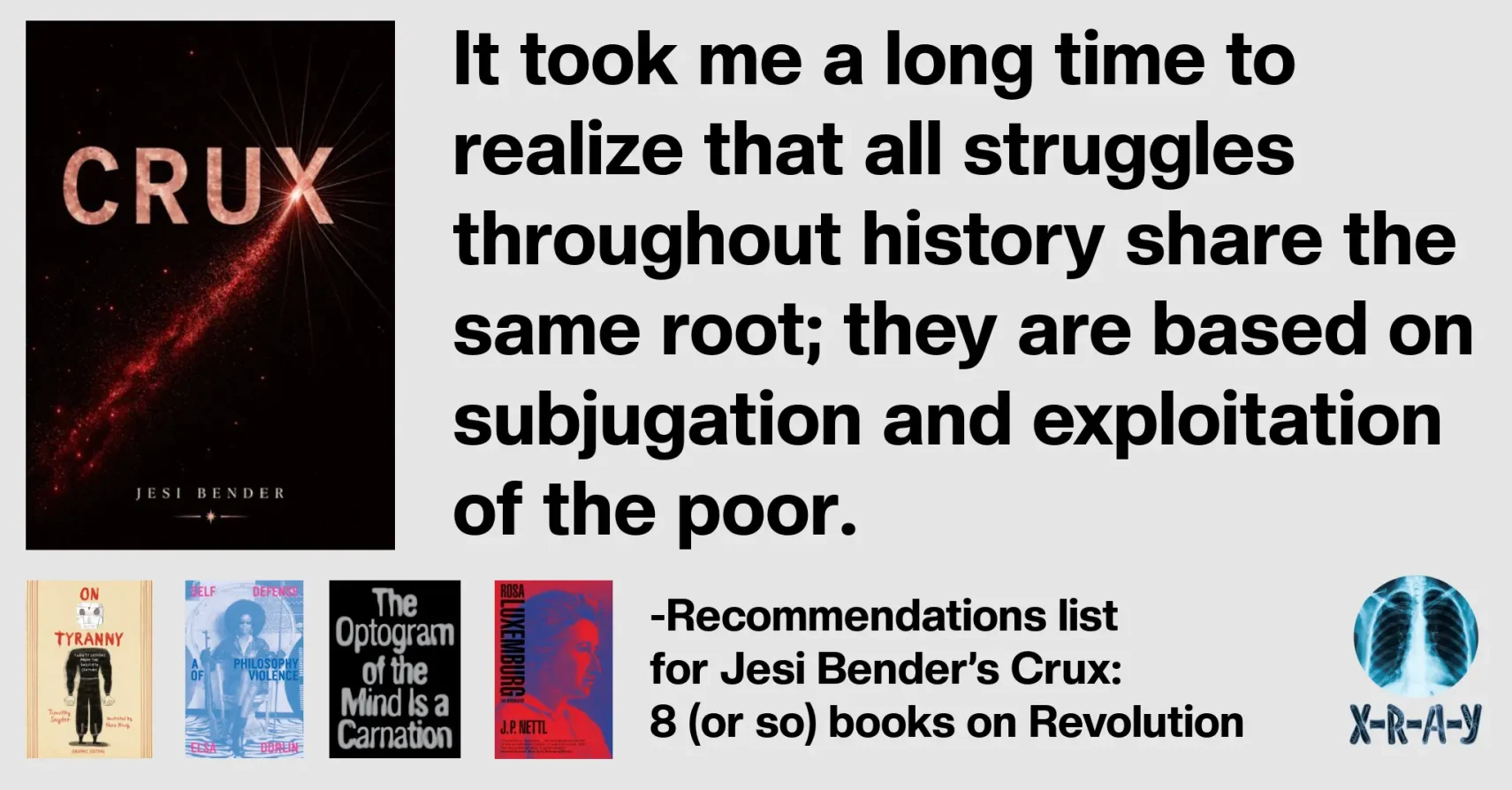
There is no shortage of books about revolution. The problem is that most people don’t know they exist. Like many American public school students, the most revolutionary text I was exposed to before college was The Grapes of Wrath. I was taught a very curated list of historical events. Everything outside of this I’ve had to seek out and learn on my own. It took me a long time to realize that all struggles throughout history share the same root; they are based on subjugation and exploitation of the poor. And, by poor, I mean the 99%. It is you and me and everyone who works or is supported by someone who works.
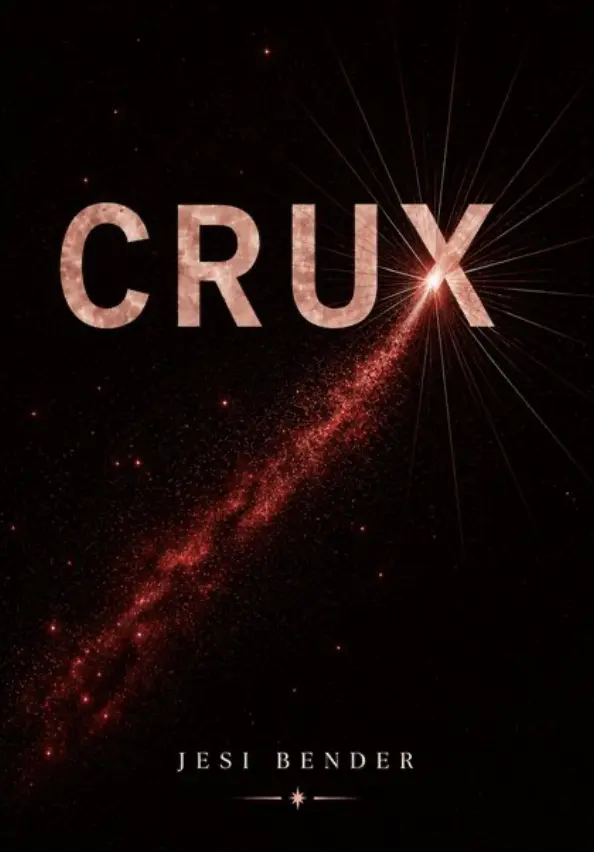
My latest book, Crux (Sagging Meniscus Press, 2026), is an experimental play set in the jail cell of Bobby Sands as he begins his hunger strike. Other historical figures visit him and they debate about the use of violence in revolution. I started writing it during Trump’s first presidency, not imagining it was possible that we’d sign up for another round. While contemporary news coverage and writings by Bobby Sands largely informed Crux, a wide variety of philosophies and written work shaped this book. If you are also contemplating revolution, I’d like to share these texts to aid in your understanding of historical struggles and of ways to create social change.
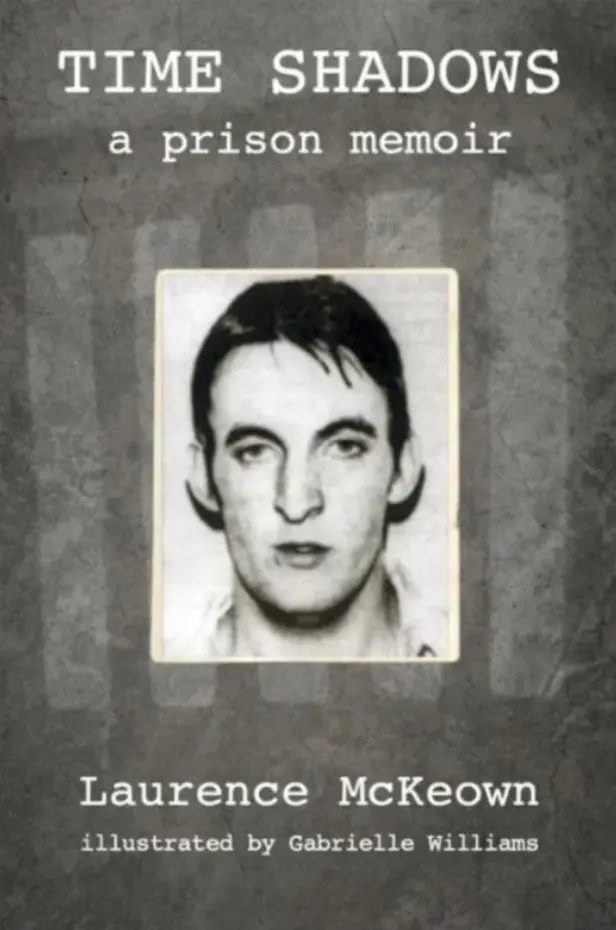
Time Shadows: A Prison Memoir by Laurence McKeown (Beyond the Pale)
I started researching Bobby Sands after watching the documentary Bobby Sands: 66 Days. I read everything I could to better understand that time and the history leading up to the hunger strike in 1981. I learned about Laurence McKeown, who is now a professor, playwright, and artist. He survived the same hunger strike that killed Bobby and others, making it a horrific 70 days. His memoir is a reflection of that time and its lasting impact. It’s a story of men who were without resource in the world, men who were imprisoned, abused, and vilified and yet still managed to rally people outside the jail to their cause. I reached out to McKeown randomly to see if he might review Crux before publication and he was extremely generous and offered notes, which add an incredible verity to the more realistic elements of my play.
Beyond being incredibly gracious, the encounter reminded me how close ‘the past’ is and how we live through and enact legacy. This book might be more difficult to purchase in the States but you can Interlibrary Loan it from your local library.
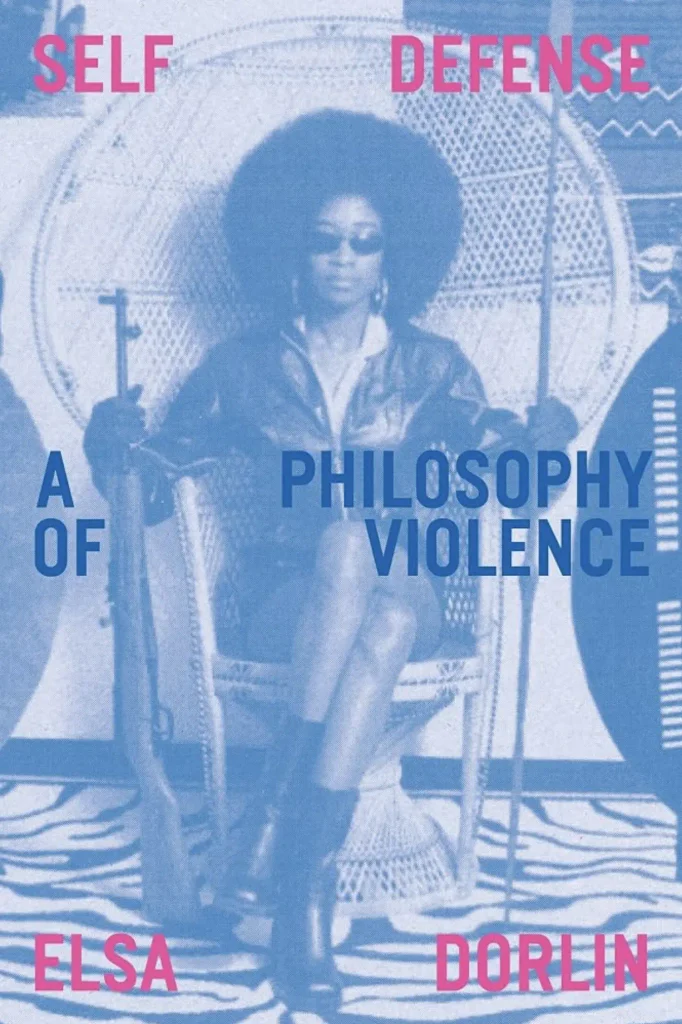
Self-Defense: A Philosophy of Violence by Elsa Dorlin, translated by Kieran Aarons (Verso Books)
I contemplated including Revolutionary Suicide by Huey P. Newton on this list but chose Self-Defense instead because I want more people to be aware of it. Dorlin is a French philosopher who asks whether or not violent self-defense is ethical. This book is at once a history lesson as well as an introduction to a wide variety of philosophies that converge on the topic of violence. She explores the intersectional nature of defense and how violence is used in many different ways by the dominant class. Perhaps most interesting is how Dorlin defines self-defense; she makes it so broad that it encompasses elements outside an immediate response, and includes sustained motivations like structural oppression.
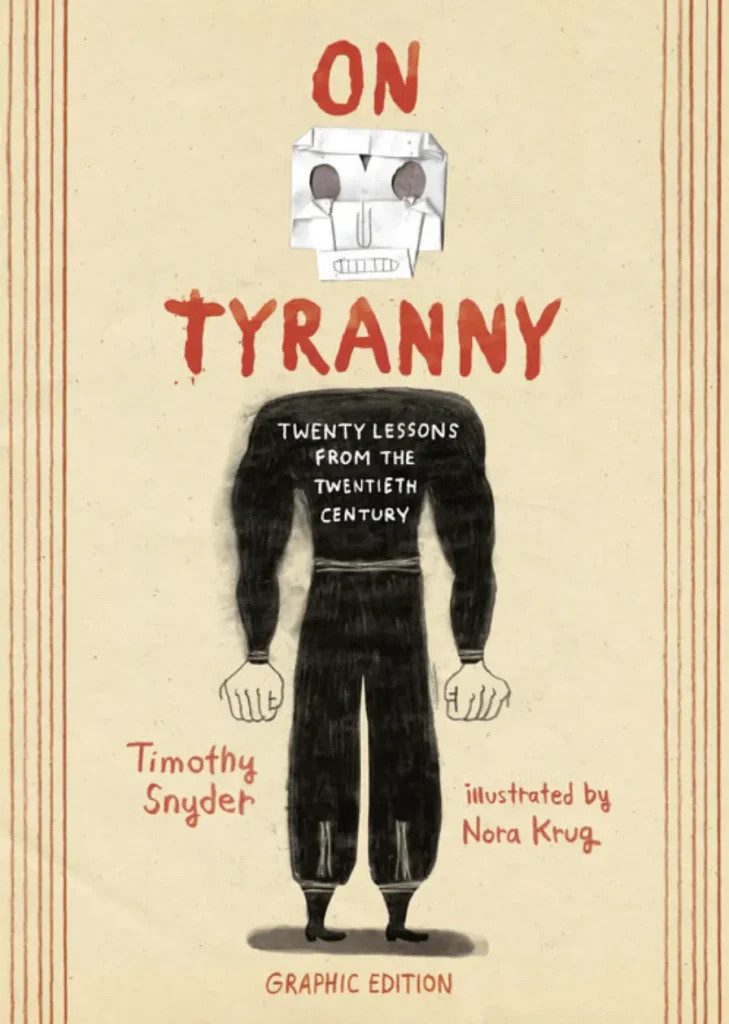
On Tyranny by Timothy Snyder, illustrated by Nora Krug (Penguin Random House)
I’ve been trying to highlight books from indie presses but this book is so important that I had to include it. There are other versions of this book but I strongly encourage you to find the graphic edition that includes Nora Krug’s warm, nostalgic illustrations. They add an emotional depth and immediacy to a text that maps out the underpinnings of authoritarianism and fascism. There is a beautiful sadness in these pages, propelled by a historic threat that is somehow both well-worn and urgent. Easy to read but endlessly thought-provoking, On Tyranny will help you understand the methods used to establish power and fetter an entire people.
The Optogram of the Mind is a Carnation by Isabel Sobral Campos (Futurepoem)
This poem-memoir explores how the image of violence imprints itself on the self. In this reflection on Portuguese colonization in Africa, Sobral Campos makes the larger social mechanism personal. When we feel like everything is being operated by invisible hands, outside our own grasp, this book reminds you that these larger actions are always rooted in the individual. An optogram is the image imposed on a retina, so we witness revolution and it leaves its impression on our bodies (passive). As we embody these changes, we bloom like a carnation into new beauty, new lives (active). Set during the author’s childhood after the Carnation Revolution (Revolução dos Cravos), a time that ended colonial wars and brought democracy to Portugal, Sobral Campos collages together scholarship, interviews, poetry, and memory to examine how we embody philosophies, our lives a continual praxis.
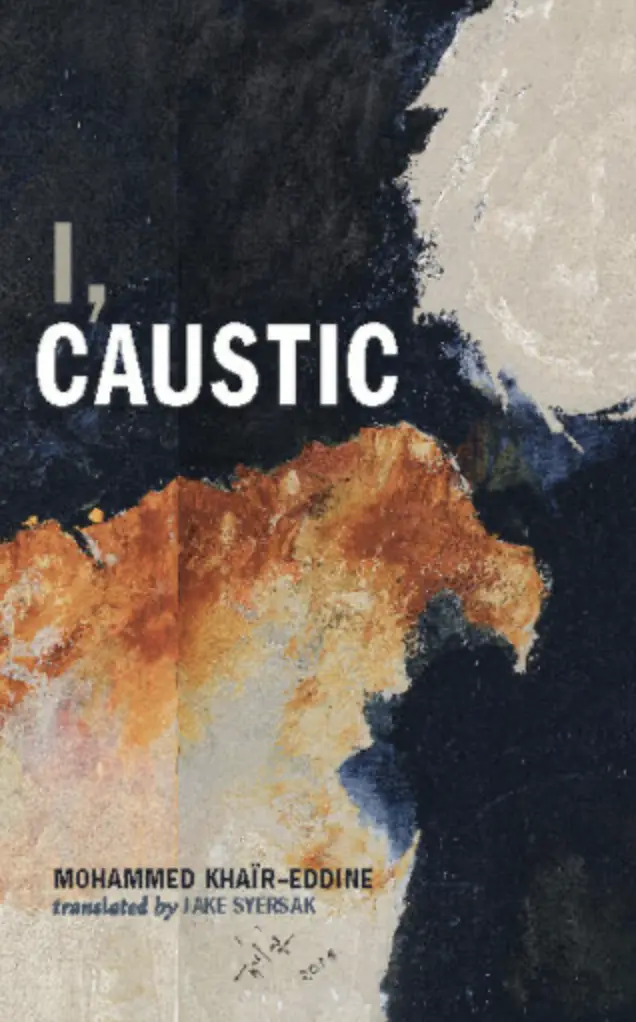
I, Caustic by Mohammed Khair-Eddine, translated by Jake Syersak (Litmus Press)
Khair-Eddine is an avant-garde Moroccan poet who uses language in abstract ways to illustrate violence, isolation, and anger like I’ve never seen before. His work is an examination of colonization and the violence therein. I, Caustic is the voice of those subjugated, screaming out to both imperialist forces as well as the bourgeois who benefit from their neighbor’s bondage. His poetic voice is indeed on fire as he rages against systems of oppression and ultimately tries to build something from its ashes. This book is a fight and a fight is a fight is a fight. It echoes across history, its relevance evergreen even amongst the ash.
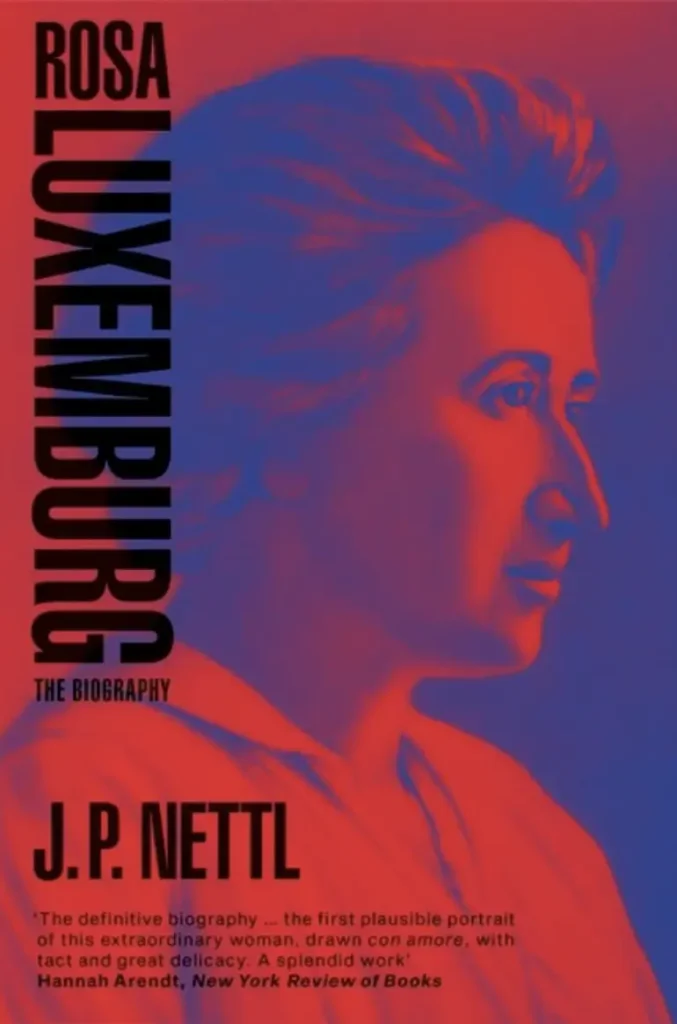
Rosa Luxemburg: The Biography by J.P. Nettl (Verso)
This gigantic biography explores both Rosa’s philosophies as well as her origins, and ultimately her violent and horrible death. Alive to ride the colossal shifts in political movements across Europe, Asia, and Africa, Luxemburg was a professional agitator and theorist, who founded the Spartacus League and served as a leader in the international socialist movement. An anti-imperialist, anti-capitalist, anti-militarist social reformer, Luxemburg was a disabled woman who stood toe-to-toe with the most powerful people of her day and advocated for revolution against the capitalist interests that drove imperialism, in the process bringing many to socialism.
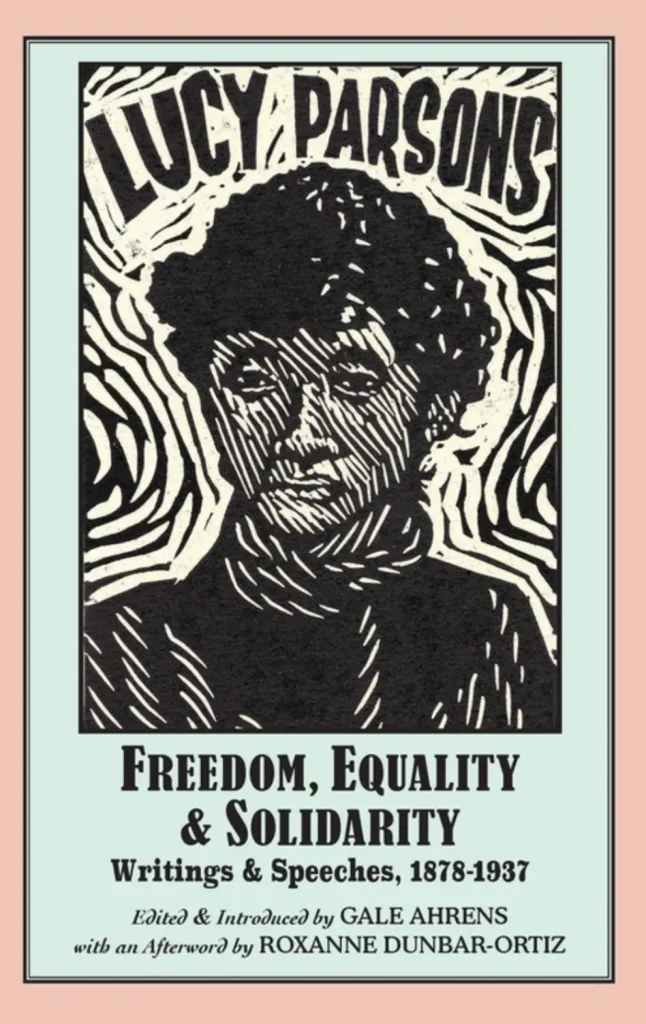
Freedom, Equality, & Solidarity: Writings & Speeches 1878-1937 by Lucy Parsons (Charles H Kerr)
Another fascinating activist is Lucy Parsons. She was an anarchist, orator, and fiercely independent black woman living in Chicago with her children after her husband was executed for the Haymarket Affair. She was one of the original founders of the Industrial Workers of the World and spoke against class hierarchy. The Chicago police famously said that she was more dangerous than a thousand protestors. This book is a collection of her writing and speeches across the most productive time of her life (though she continued her activism until her death at 91). Her writing is poetic and passionate, always educating others on the plight of the working class.
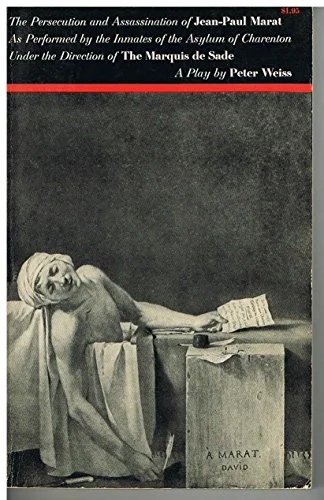
Peter Weiss is my favorite playwright. Most people know him from his play The Persecution and Assassination of Jean-Paul Marat as Performed by the Inmates of the Asylum of Charenton Under the Direction of the Marquis de Sade (commonly known as Marat/Sade). This play-within-a-play is about the murder of French revolutionary leader Marat, as put on by inmates in the asylum where the Marquis de Sade was imprisoned for his sexual proclivities. This meditation on individualism, violence, and social revolution is a masterclass in how to present complex philosophical ideas in a tangible way. Equally important are his play The Investigation and his multi-volume novel The Aesthetics of Resistance, both of which dramatize anti-fascist resistance and explore the trauma of war. He also wrote an interesting play imagining Trotsky’s final years, entitled Trotsky in Exile. Resistance and response to a repressive authority are at the heart of Weiss’s work and life. As with the characters in Crux, I am perpetually inspired by the bravery of ordinary people like Weiss, who speak up in the face of injustice.
Jesi Bender is an artist from Upstate New York. She is the author of the novels Rhododendron (forthcoming 2027), Child of Light, and The Book of the Last Word; the plays Crux and Kinderkrankenhaus; and the poetry collection Dangerous Women. Her shorter writing has appeared in FENCE, Denver Quarterly, Sleepingfish, and others. www.jesibender.com