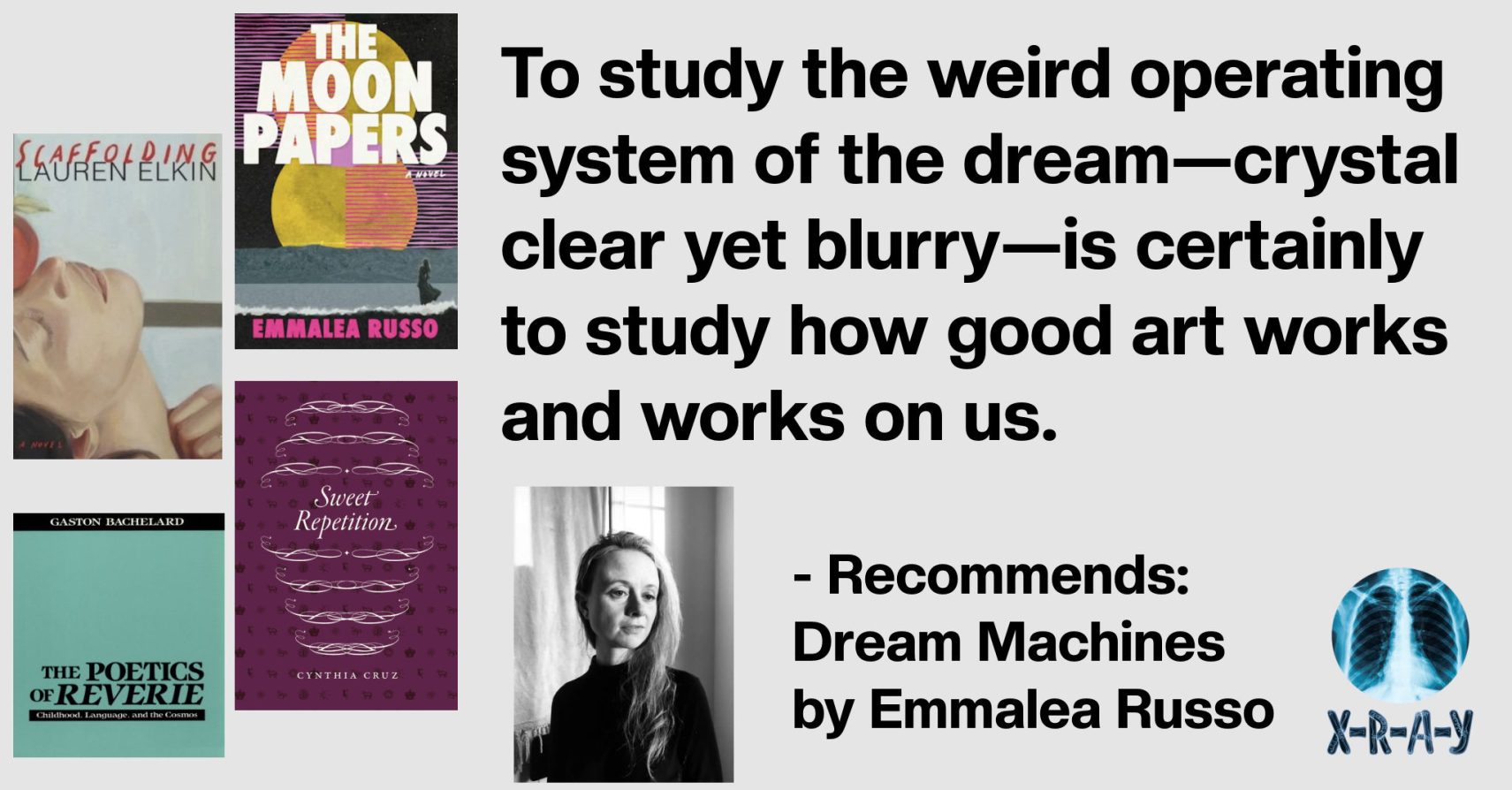
Dreams. Dreams. Dreams. Nightmares. Reveries. How do they power us? Take hold? What do they tell us, in their own wicked and unwieldy ways? Lately, they’ve been on my mind, as I’m teaching a yearlong dream study workshop. We’ve been delving deep into dreams from literature, film, and psychoanalytic cases. I often teach long and trippy workshops, but this might be my favorite yet. I chose dreams this year, in part, because in the days/daze of digital-everything and quick AI answers, the dream remains impenetrable. It is remnant, belonging to the world of high weirdness and ungraspable grossness and subtlety. Somehow both alluring and sickening. Remains of the day, as Freud said. The dream escapes, leaving us dazed—altered. It escapes surveillance, slick interpretation, being nailed down. To study the weird operating system of the dream—crystal clear yet blurry—is certainly to study how good art works and works on us. There is no formula. The dream, much like art that leaves its mark, is beyond “like” or “dislike.” The dream is beyond, and still—it’s right—it’s right here. All around, making its own stomach-churning atmosphere. Dreams can be read and reread, picked apart, and followed. Hélène Cixous suggested that we not interpret the dream or try to pin it down but rather, ride it. Ride it like a powerful creature: “let the dream carry us on its mane,” she wrote. She places “the school of dreams” as one step on her “ladder of writing” in her book Three Steps on the Ladder of Writing. My recommendations, then, are dream machines—unwieldy apparatuses that take us into ourselves and the world via the dream’s mane, should we take the risk of holding on.
Many of the texts on this list explore not only dreams, but the psychoanalytic act, habits, repetition as space of transcendence and torture, obsession, altered states, and night as the most ancient and psychedelic zone.
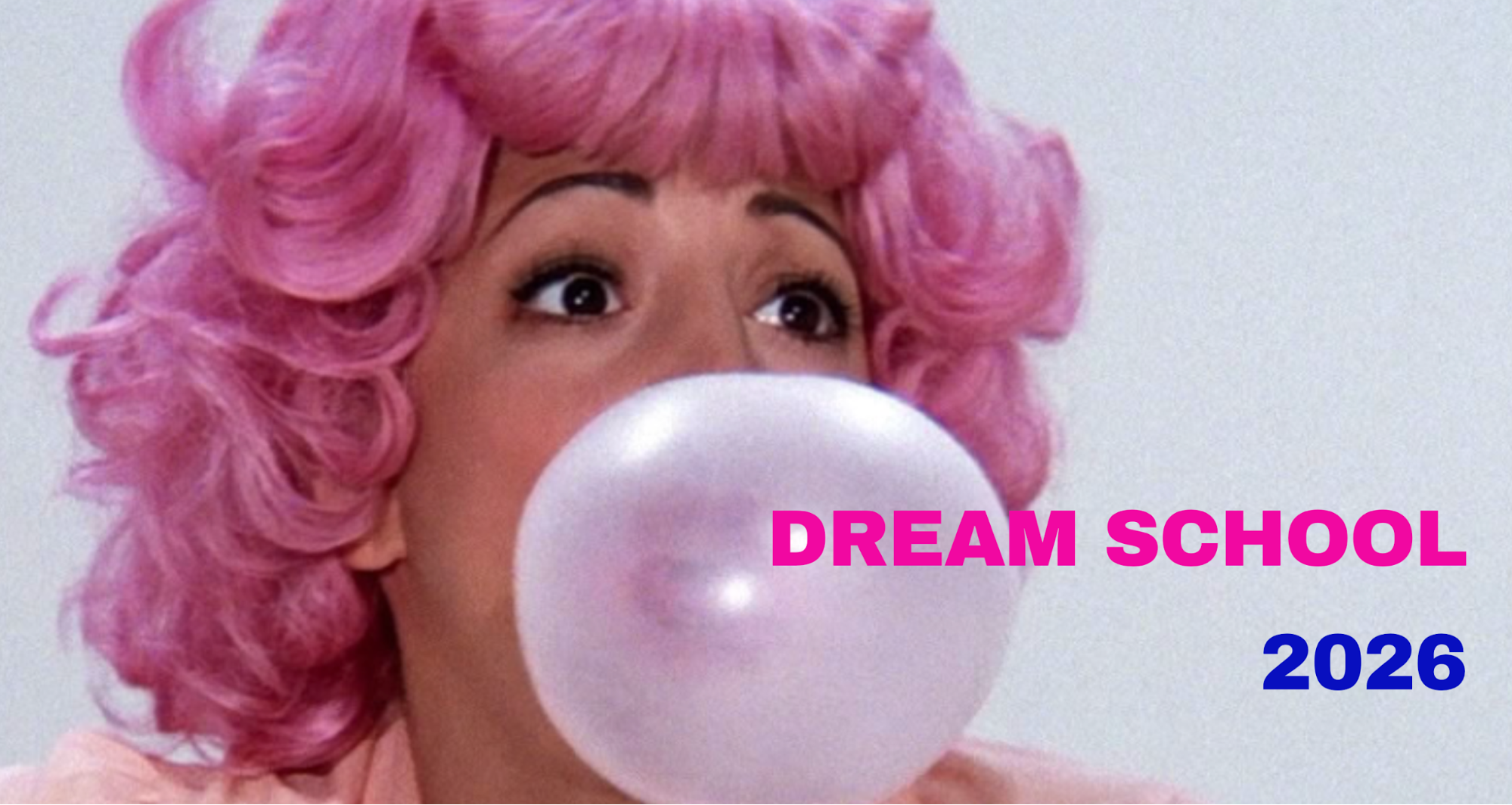
I must begin with my own workshop. It’s been top of mind all year, and we’ve been having some mind-bending talks. If you want to study with us, you can hop on the dream train any time. You can grab the recordings of the classes we’ve already done (Coleridge’s famously druggy, dreamed-up fragment of a poem, Kubla Khan and Emily Bronte’s gothic nightmare Wuthering Heights). Upcoming dream studies include a musical dream number from Grease, Tony Soprano’s dreams, surreal moments from Bergman’s Wild Strawberries, and more. In 2026, the dream is trip, respite, (un)readable book, remedy for AI. There’s also a dream break-out group every other month for those who want to generate new work from dreams and delve into their own dreamy images/words.
Dress, Dreams, & Desire: A History of Fashion and Psychoanalysis by Valerie Steele (Bloomsbury Visual Arts, 2025)
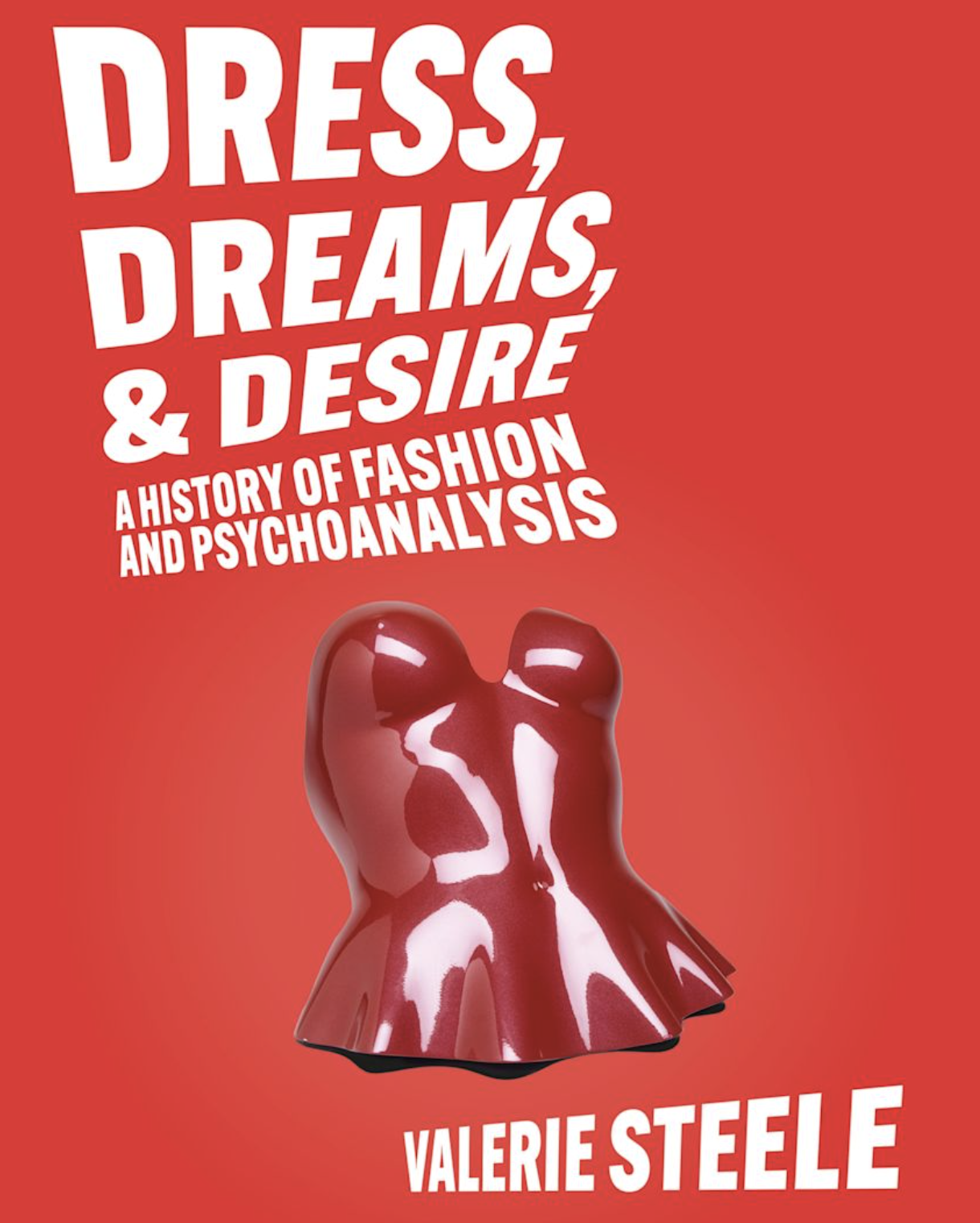
A gorgeous book filled with groovy images and unlikely connections between garments, psychoanalytic stuff, and dreams. Corsets, McQueen, phallic women, castration, Lacan, veils, gazes, and punks. It’s decadent and rigorous at once. Plus, it has a fabulous blood-red cover and so many shiny images of recent and past fashions. Steele writes that fashion “can be an aggressive force that destabilizes and fragments the self.”
Aeyde Magazine’s Spring/Summer 2026
The psychoanalyst Jamieson Webster is the guest editor for Aeyde’s Spring/Summer edition. The theme? Dreamworlds and the collective unconscious. Thus far, Webster has written on the nightmare, dream as trauma, and Freud’s take on the dream. The dream is, as she writes, an “ancient technology” that is worth studying now. I highly recommend following along. Dreams are in the air. Intimate, worldly, otherworldly, and freaky.
The Poetics of Reverie: Childhood, Language, and the Cosmos by Gaston Bachelard (Beacon Press, 1971)
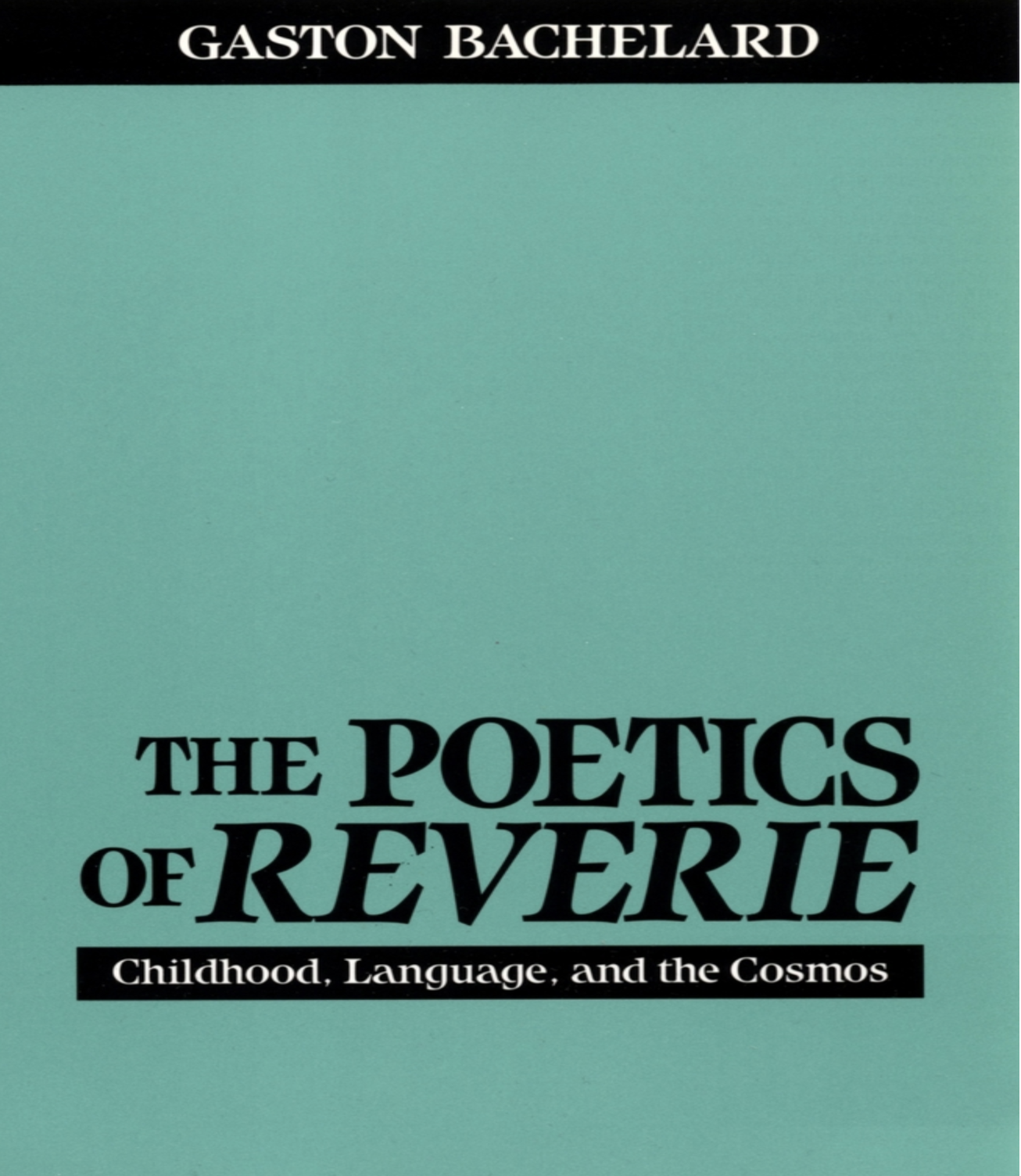
This one’s old school, but way underread and worth picking up. Bachelard distinguishes the reverie from the dream in his own very French way. And he says things like: “Beautiful words are already remedies.” But what’s a reverie? “Calm beaches in the midst of nightmares.” The book itself feels like a reverie, with Bachelard fashioning word magic out of the ordinary. He speaks of the cosmos, the mind of the dreamer, weird words, melancholy, and the reverie-stuffed space of childhood. All the while, he places the poet as the forerunner of all things dream and reverie. The poet has a special sort of knowledge….
Tribute to Freud by H.D. (New Directions, reprinted 2012)
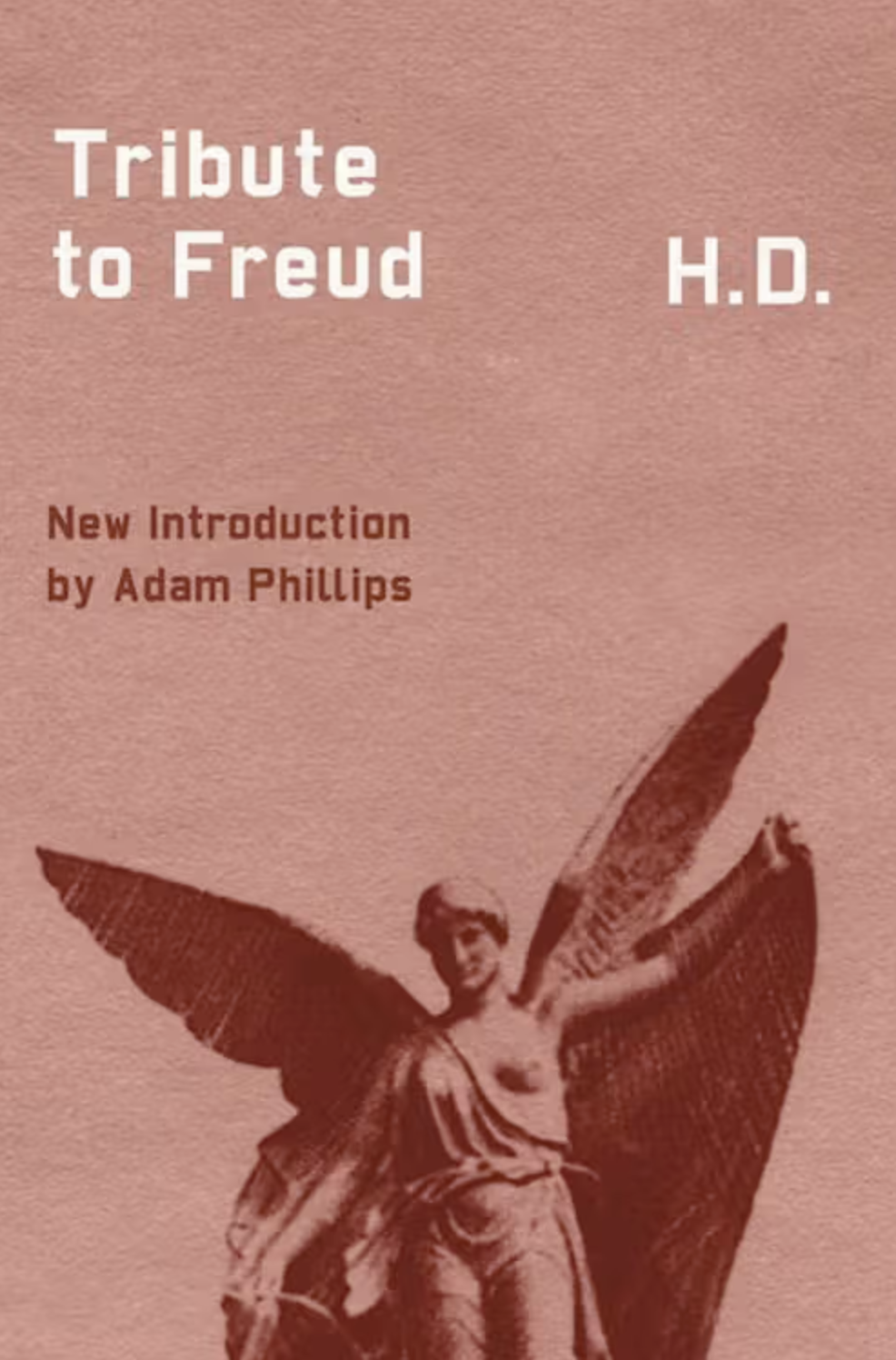
Speaking of poets, the incredible and underread modernist poet H.D. (Hilda Doolittle) gave us a gift. She wrote about her analysis with Freud (she affectionately calls him “the Professor”) during the last years of his life. This book is part memoir, part pre-war document, part biography of the founder of psychoanalysis, and part behind-the-scenes takes from Freud’s famous couch. H.D. even tells us what she doesn’t speak aloud to Freud himself. We become quiet listeners, crouching behind the couch. Specifically, she lets us in on her more occult musings on the zodiac and astrology—which she tells us that Freud does not approve of. H.D. writes of her childhood in Pennsylvania, her dreams, visions, and hallucinations, and notes that Freud’s interpretations are almost “too illuminating.” She praises Freud and disagrees with him. It’s a book of time and memory, as she restores sacredness and magic to the moment—imagining the little wheel of zodiacal creatures all around the ticking and clicking clock, the psychoanalytic hour. This book feels like a medicinal substance. Handle with care and read frequently.
Scaffolding by Lauren Elkin (Picador, 2024)
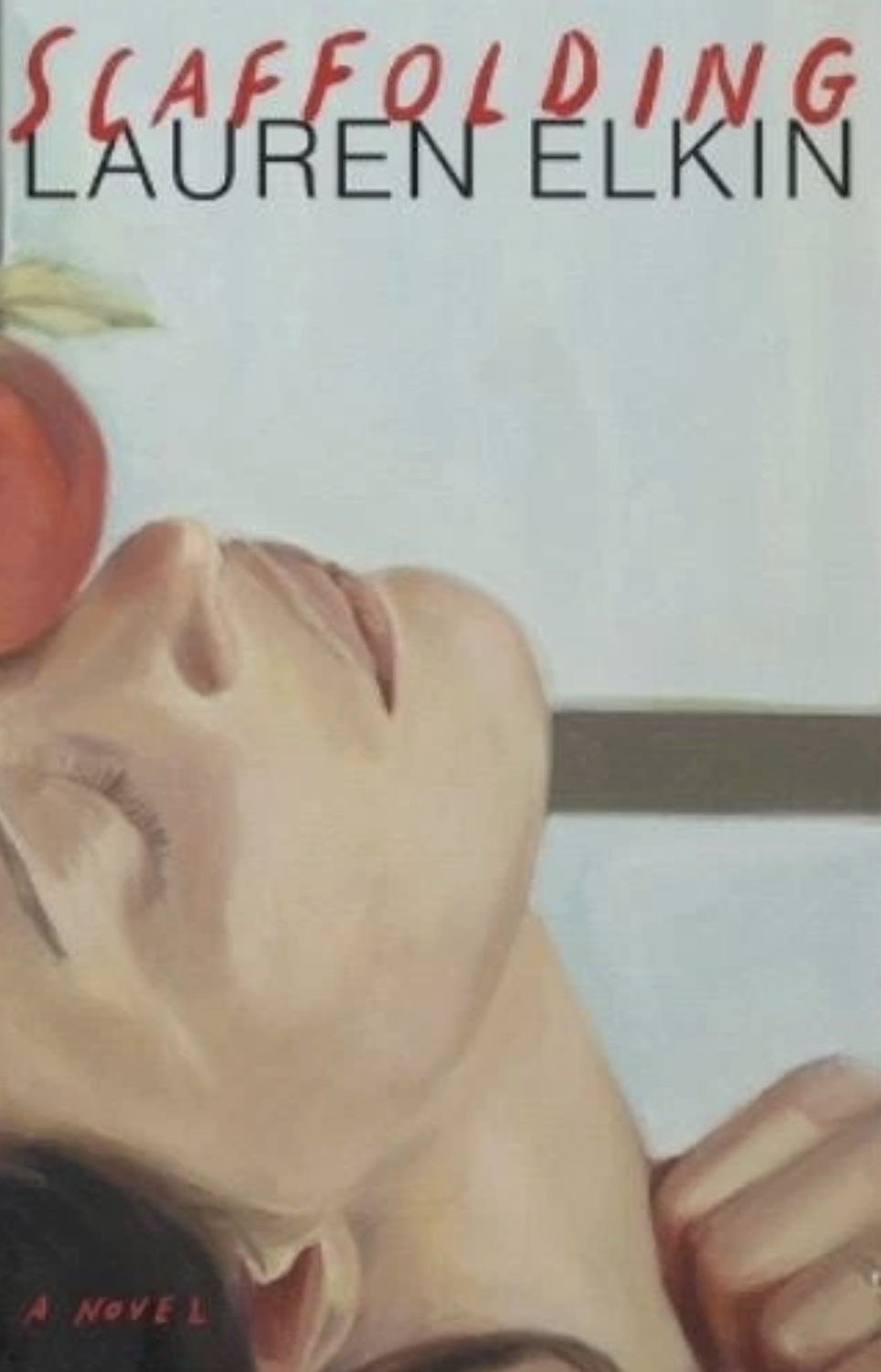
A dreamy novel about two psychoanalysts inhabiting the same space during two very different times. The novel, like its characters, splits. I’m reminded of the way dreams work: how one person can split and become many different people, or how several people seem to inhabit one dream entity. Lacan, Freud, and the gang show up again and again. At the heart of the novel is a question about women and desire. I flew through this book. Dreams within dreams within dreams.
The Moon Papers by Emmalea Russo (Arcade, 2026)
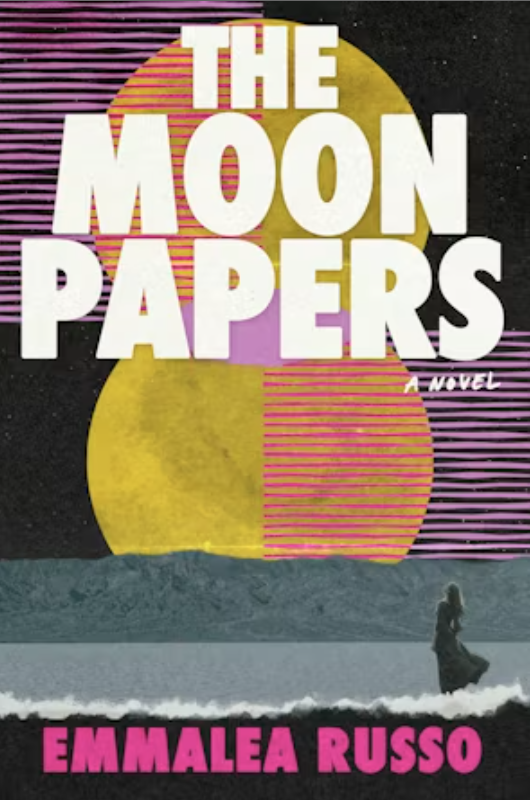
Can I recommend my own book? It’ll be out in June but you can preorder now. A sequel to Vivienne, it takes place in a dream-laced near future. A second moon will launch at the end of a very hot, delirious summer. But the book, I guess, is more concerned with the emotional states of the characters than the technical realities of the second moon. I’m calling it a bonkers beach read.
The Return of the Repressed by Louise Bourgeois (Violette Editions, 2022)
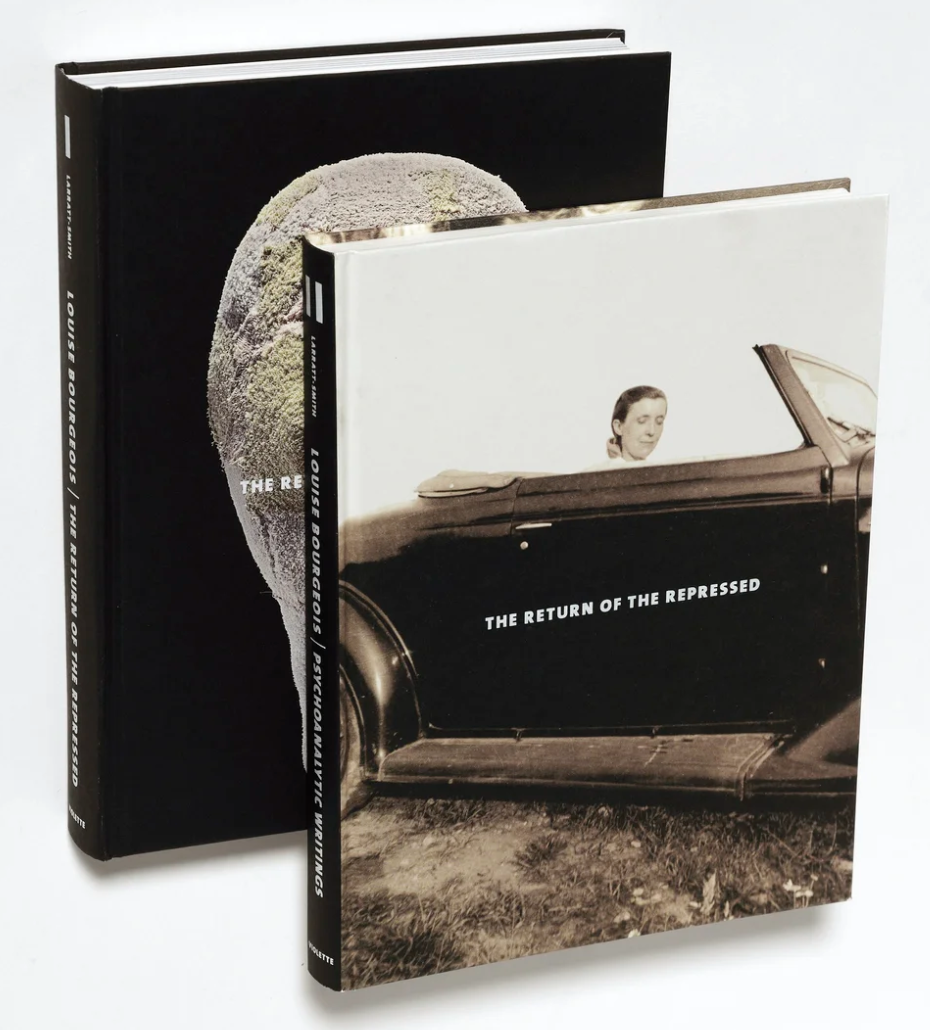
I’ve been turning and turning and returning to this book for the past year or so. Bourgeois documents her psychoanalysis, her dreams, and her artistic process. Handwritten lists, notes, and hot takes on everything from motherhood to social anxiety. It’s also a beautiful object—two thick books filled with images of her work. At one point she writes: “I want to stop analysis. I think it is boring and takes up too much of my time.” And: “the damned up energy is terrific.” We get an intimate tour of the energetics powering her work—what depletes her, gives her life, annoys her, makes her want to sculpt, to write.
Sweet Repetition by Cynthia Cruz (The University of Chicago Press, 2025)
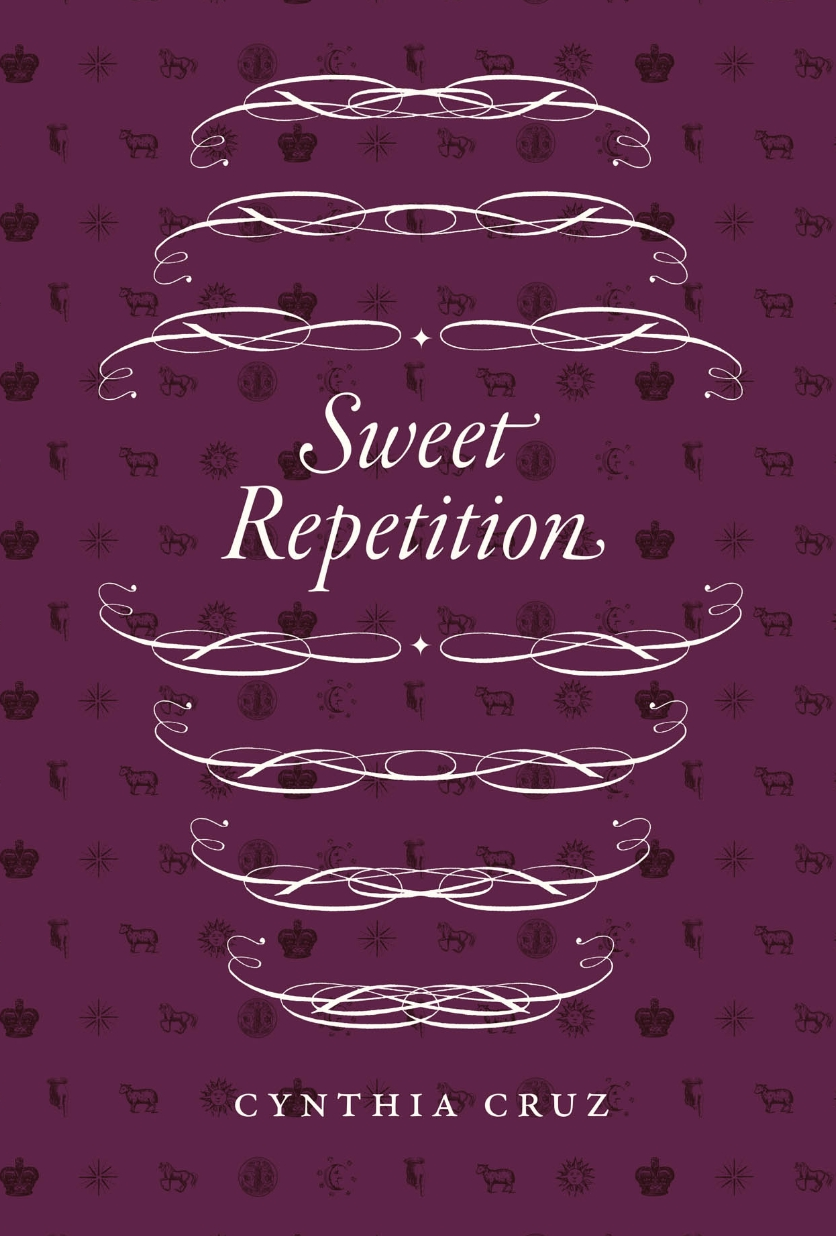
Cynthia Cruz is one of the most interesting poets writing today, and this book is her latest. Psychoanalysis and dreams show up in this book—and it’s concerned with (as the title suggests) the generative and surprising breaks that repetition carries forth. Poetry repeats. Freud told us that poets discovered the unconscious way before he did. Perhaps this has something to do with the repetitive—both sweet and tortured—nature of poems. Refrains, fragments, rhymes. Coming back again and again to the same theme or line—each time different. This book of poetry has a dream logic that’s difficult to describe. Cruz writes: “dreamfuls / Of soft white powder” and “one dream / Foretells another.”