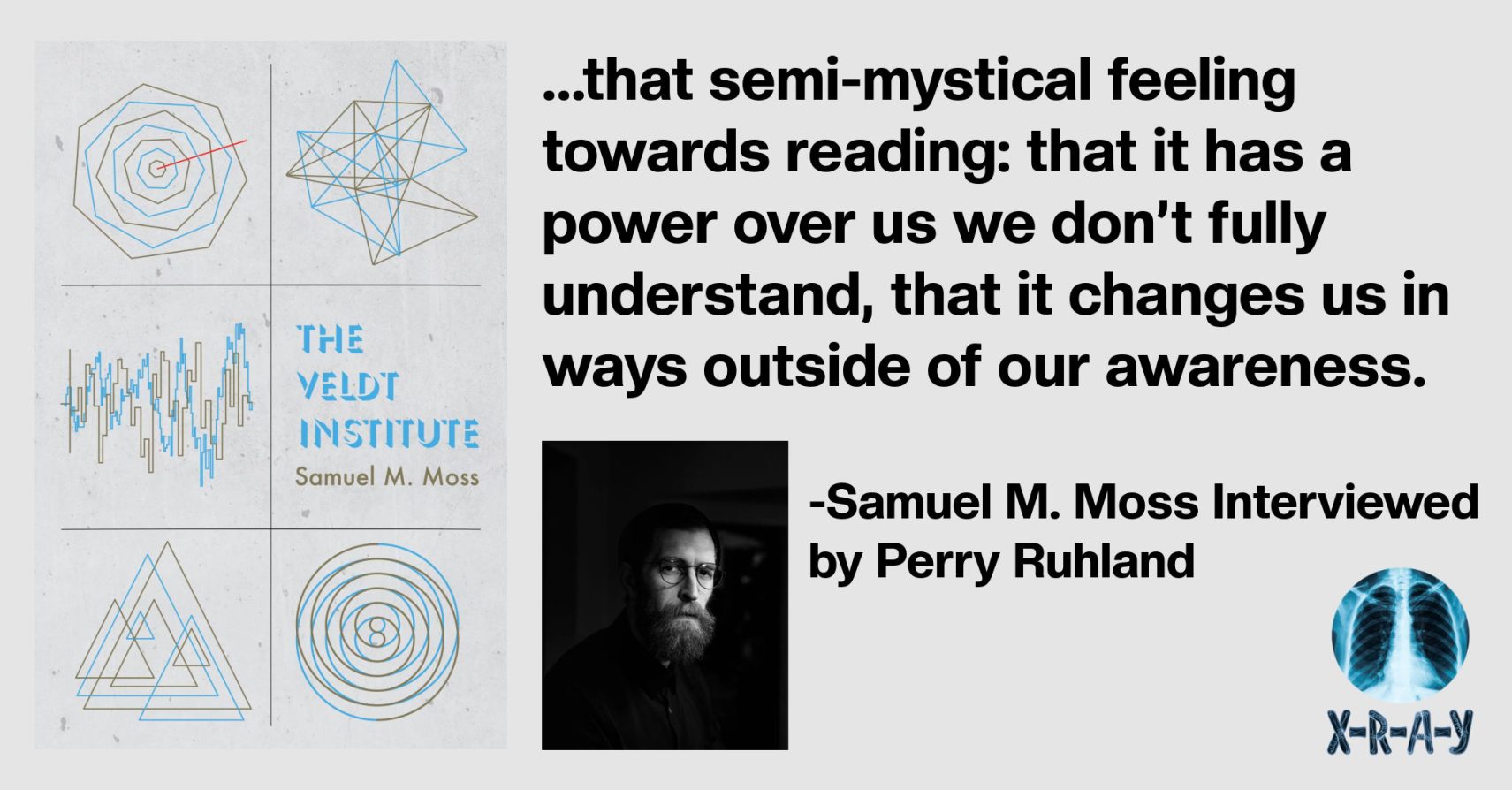
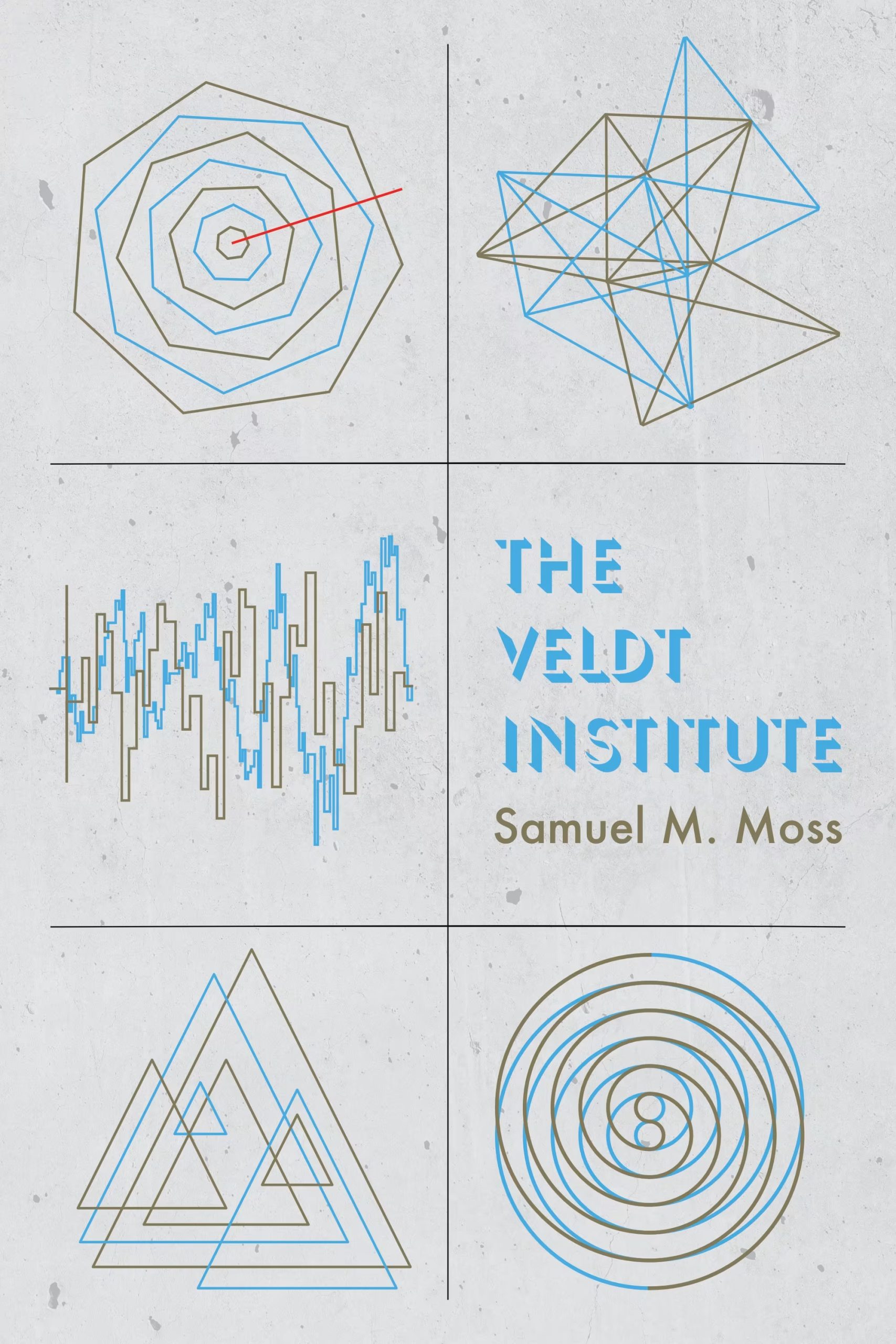
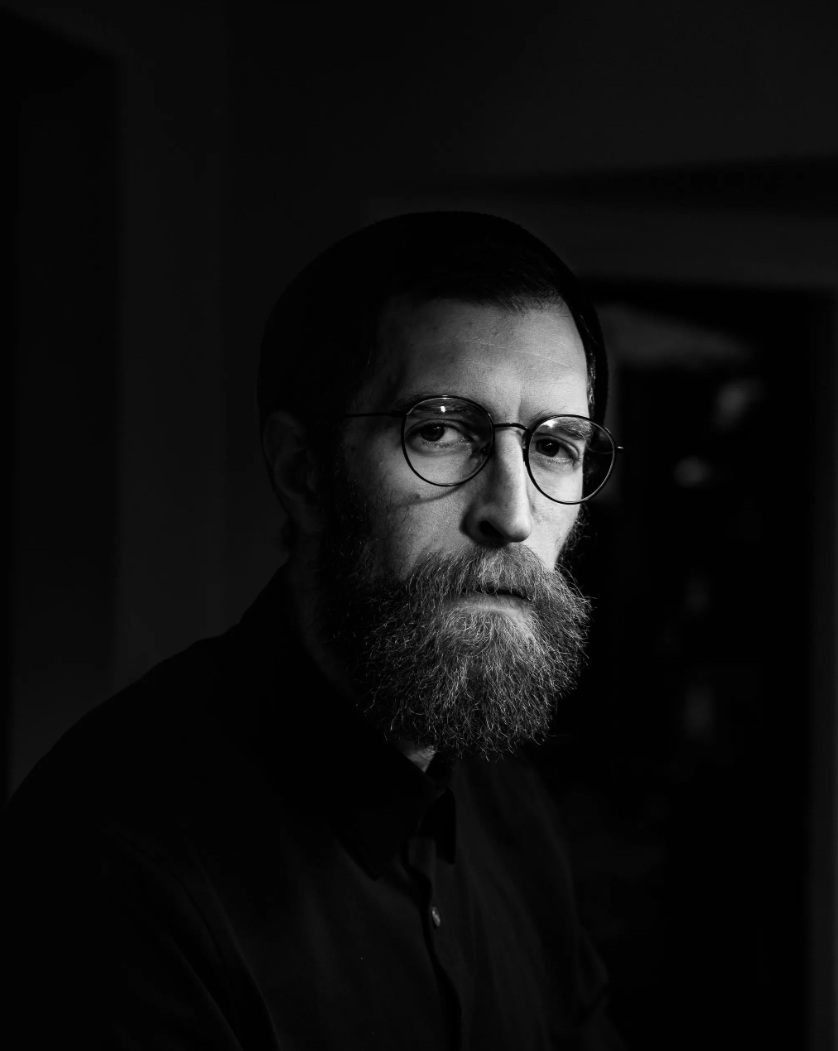
 In Samuel M. Moss’ debut novel The Veldt Institute (Double Negative Press, 2025), anonymous patients seek the cure for their own ineffable malady. Their treatment is conducted on the grounds of the titular institute, some strange cross between an abbey and a sanatorium, where their philosopher-doctors prescribe a wide range of strange and specific activities. Reading this great book, and particularly the accounts of these treatments, prompted me to take long walks, sit by the lake, and stare at my ceiling. I asked Samuel M. Moss about some of the practices behind the cures.
Perry Ruhland: One of the treatments prescribed at the Veldt Institute is the “Sculpture Cure”, wherein a patient is made to sit and contemplate one of a variety of abstract sculptures for varying periods of time. Two of your previous stories, “Gallaher Calls” (Dim Shores Presents Vol. 1) and “The Sculptor” (Vastarien Vol. 4, Issue 1) feature characters who are literally transformed by sculpture. Why is sculpture so important to your work?
Samuel M Moss: Great question. So many reasons. I think most of us ‘get’ a lot of art. Most people can sit down and enjoy a piece of music or a pretty picture up on a wall. Sculpture is harder to fathom. It has always seemed to be less about raw enjoyment and more about something else. But what that something is, is hard to say. The purposes of music and flat art have usually been split between the sacred and the profane while sculpture (in the form of idols) has tended to be set for more sacred purposes.
Personally: there is really good, public sculpture both in the town where I grew up and the university where I went to school. The sculptures were just sort of there. There might be a placard with a name and year buried in the grass and you just had to walk to your next class and ignore the giant marble man that was staring at you that no one knows anything about. Weird right?
Sculpture too, is the only medium that has really resisted mass reproduction and so has maintained ‘aura’. I can imagine how most music or paintings are made, but there is a lot of sculpture that just doesn’t seem like it could be made by human hands.
As writers, I like to think that what we are doing is similar in some ways to sculpting. A good story should function in three (a great story: even more) dimensions. A good reader can turn that story over in their mind and see it from different angles. We also work with surfaces and depths, of a kind.
PR: On a similar note, The Veldt Institute contains three dedicated “listening rooms”, where patients are able to listen to vinyl records. The narrator describes listening to a variety of albums, the vast majority of which we’d consider some variety of sound-art or avant-garde composition. How has avant-garde music informed your approach to writing?
 SM: Fiction is really well suited at conveying ideas. Music (not taking into account lyrics) is good at conveying feelings and emotions. I’m just not very interested (or skilled) at writing character and plot. The world is already so full of people talking at each other, I’ve never understood why literature is expected to give us more of this. I’m driven by feelings and sensations, especially those I can’t name.
Avant-garde music – at least the kinds I’m most interested in, like ambient music – can convey some really interesting, and strange, feelings. Traditionally, fiction has evoked these feelings sparingly, maybe as a side-effect of some event in the plot.
We’re currently seeing a growth in ‘ambient’ fiction. It’s not a genre so much as a catch-all for people creating form-spare, sensation-heavy literature that is most similar to the kind of work that artists like Tim Hecker, Eliane Radigue, Lawrence English, Robert Rich, William Basinski, Sarah Davachi, Kali Malone and Sunn 0))) (among many others) have been doing for decades.
Writers (‘ambient’ and otherwise) have a lot to learn from ambient musicians, but we’re also doing something pretty different: not emulating but adapting the ambient attitude to a new form. It’s exciting to think that ambient literature is still in its early phases, that there might be a lot of area to explore and new techniques to create and might be one of the 21st century’s first truly new literary fields.
PR: Could you say a little more about ‘ambient literature’, what it is and how you approach it as a reader and a writer?
SM: Honestly, the last answer holds most of my thoughts on the matter. Talking about categories is fraught because they are so nebulous and it’s usually best not to take them too seriously. Nathan Gillian has that line that goes something like ‘Genre isn’t a category that books go into, but a way to describe what a book does’. It really is a catch-all term and most books that could be described as ‘ambient’ probably have more differences between them than similarities.
Patrick Modiano’s Young Once (recommended by Ingrid at Double–Negative) might be described as ‘proto-ambient’. Some of the Scandinavian writers, like Fosse’s Septology, though realist, could fall into the vein too. Then there is the recent crop of avant-garde stuff – writers like Gary J. Shipley or Meg Gluth, presses like CLOAK are the first to come to mind – that are doing work that is more explicitly ambient.
There isn’t a way that I approach reading ambient fiction, per se. Only that I do approach these kinds of books (usually by accident) more often than I approach books about divorces or spies. As a writer I try to do as little as possible. Seeking some sensation or effect often leads to work that is more ambient than structured.
PR: Chunky, analog audio equipment makes multiple appearances throughout the novel. What’s your interest in these machines?
SM: We take for granted that we can play nearly any song ever recorded with good fidelity anywhere in the world, at any time, with no effort. But it’s pretty spooky to have this box in your house that music, or a dead person’s voice, comes out of. Like sculpture, analogue audio equipment is one of the last classes of object to maintain some degree of aura. I have always found that the more complex stuff still does.
I’m interested in the audiophile world, and am a little bit of one myself, but in a mostly sane way. There are people out there, though, that obsess over the equipment, will pay tens of thousands of dollars to set up a sound system, and claim to be able to hear qualities or improvements that machines cannot.
There is a level to this pursuit that is magical or even religious. These people build what are essentially altars: partially to music, partially to electronic engineering and in large part to their disposable income. All altars are beautiful even if these are dripping with snake oil and unwise financial decisions. Often the mystical pursuit of audiophilia occurs in people who are, by all other measures, incredibly rational.
PR: The titular Veldt Institute is an impressive piece of imagined architecture – how did you approach designing the building?
SM: Luckily it’s much easier to imagine an impressive piece of architecture than actually design or build it! The idea of a cone situated in the center of a landscape was stolen from Bernhard’s Correction. But the cone does lend itself well to the anonymous, directionless nature of the Veldt and also has a New Age feel to it. I’m very fortunate that my old friend Jesse Chappelle went to architecture school, works designing structures and was kind enough to create actual diagrams of the building, which were then used by Double–Negative publisher Nick Greer on the inside of the cover.
PR: How does the structure of the Veldt Institute (building) inform the structure of The Veldt Institute (book), or vice-versa?
SM: It’s a great question and I wish I knew the answer. Maybe a critic will be able to figure this out. I will say that, early on in writing, I decided that there would be four paths (one in each direction) and seven doctors. The number of doctors was pretty much arbitrary, but of course the number seven has lots of mythical and mystical resonance. The book was more or less built off of the framework.
PR: In the process of developing from this framework to the completion of the book, how did the project change? Were there any early concepts that had to be revised or excised?
SM: Pretty much everything was figured out on the fly. I set out the points mentioned above, then pretty much just went. If anything, I had to add more concepts to fill things out.
PR: At one point, the protagonist walks a classical labyrinth in the veldt. What is the appeal of walking a labyrinth? Do you have any personal experience with these sorts of labyrinths?
SM: Yes! Any time I come across one of these, I walk it. One of my favorites was a labyrinth I stumbled on in the Kofa National Wildlife refuge which was made by moving the rocks on the ground. W.H. Matthew’s book Mazes and Labyrinths: Their History and Development is a good resource that shaped my thinking.
The appeal is that each person can put their own meaning and interpretation onto the shape, and the act of walking it. For some it is an allegory of life. For others a guide to inner discovery. Early descriptions quoted in Matthew’s book treat them like a fun diversion with little mention of deeper significance. At the end of the day, it’s a pretty design that someone drew, inscribed or carved into the ground that attracts people like bait.
PR: One of the two doctors Mellinger working at the Veldt Institute teaches “Therapeutic Choreography”, a movement practice that I read as somewhere between yoga and butoh. What is your experience with movement practice? How does it connect with your literary practice?
SM: I danced for a good portion of my childhood. I took ballet and flamenco classes. This was semi-voluntary and the experience ranged between being educational and punitive. I’m glad I did it, though. I like to dance now. I’ve never been into yoga, though I’m curious about the crop of theraputic-mystical movement schools that cropped up in the 20th century like the Feldenkrais, Gurdjieff movements, Cleargreen and so on.
The connection, to me, is totally clear: when you’re really writing, you’re dancing on the page. It’s that simple.
PR: The books available to patients in the Institute are “books of ideas”, almost entirely incomprehensible, whose words “float past one’s eyes”. They are intended to “[carve] out a place in [your] mind, which will one day be filled with [their] meaning.” Tell me about your experience with this approach to reading.
SM: It reflects my own (very limited) experience of reading philosophy. I’ve always been attracted to reading philosophy, usually the more out there stuff like Whitehead, Deleuze and Hegel. When reading, I inevitably find myself lost. It’s only down the line that ideas (and usually only a small fraction) from the book start to connect.
It also reflects that semi-mystical feeling towards reading: that it has a power over us we don’t fully understand, that it changes us in ways outside of our awareness. It’s a powerful form of faith. Like any kind of faith, it keeps us moving down our path whether or not it is objectively true.