
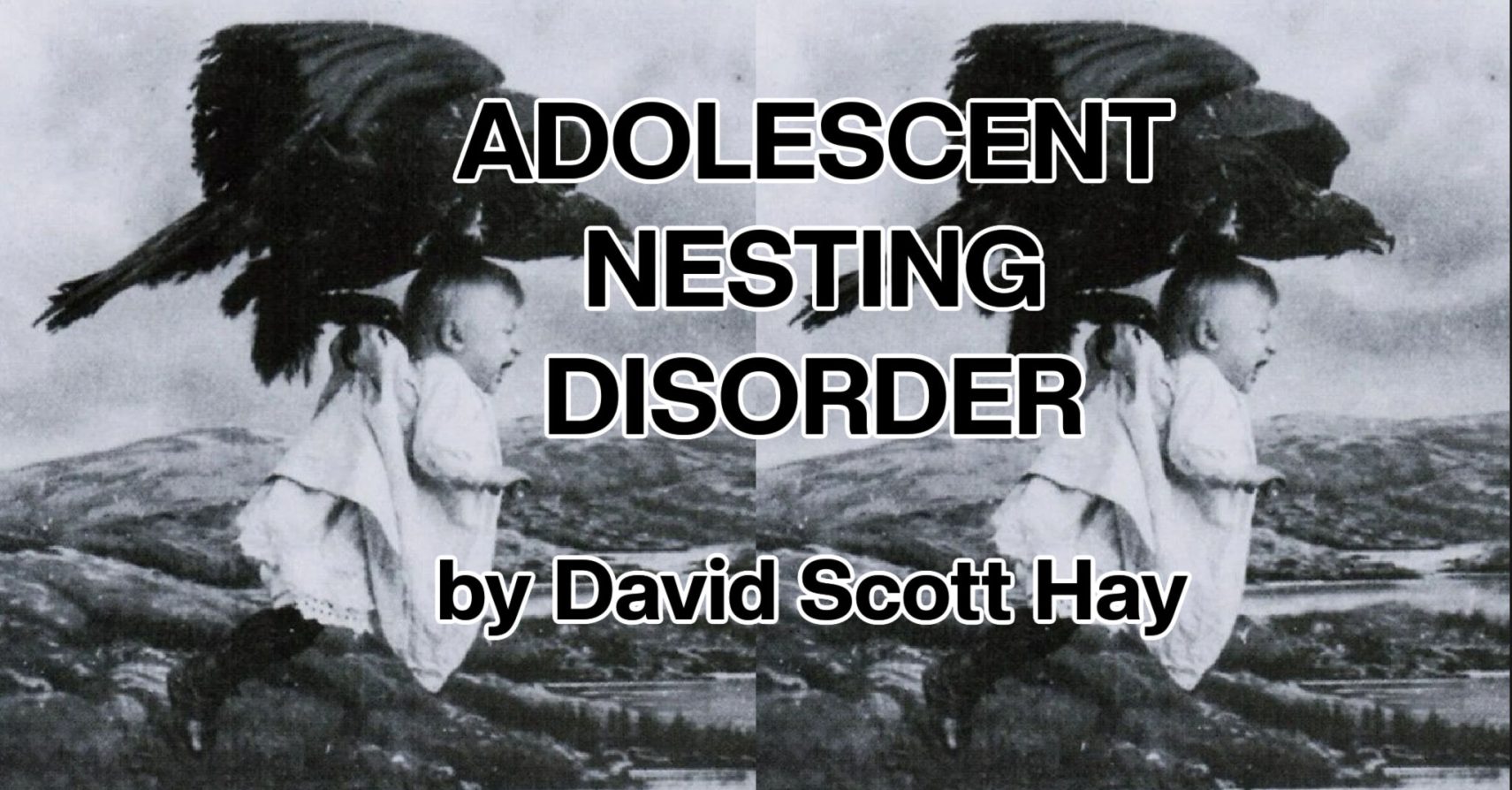
Mandy screams her son’s name as pine needles crunch underfoot.
Missing for thirty-six hours, the Park Service worries. You can go days without water, she remembers, more without food. Her son is lean, but resourceful. So many mornings he’s helped his younger brother get ready for school. Still, she takes an ogre’s swig from her flask and screams into the forest and listens for a response, a rebuttal, an echo.
Anything.
Nothing.
A pine cone lands at her feet, and then a stick. Her heart now the thrum of a hummingbird. She cranes her neck and sees a large shadow. She screams her son’s name; her voice now a hoarse whisper. Another pine cone hits her. Then a shoe. Her son’s.
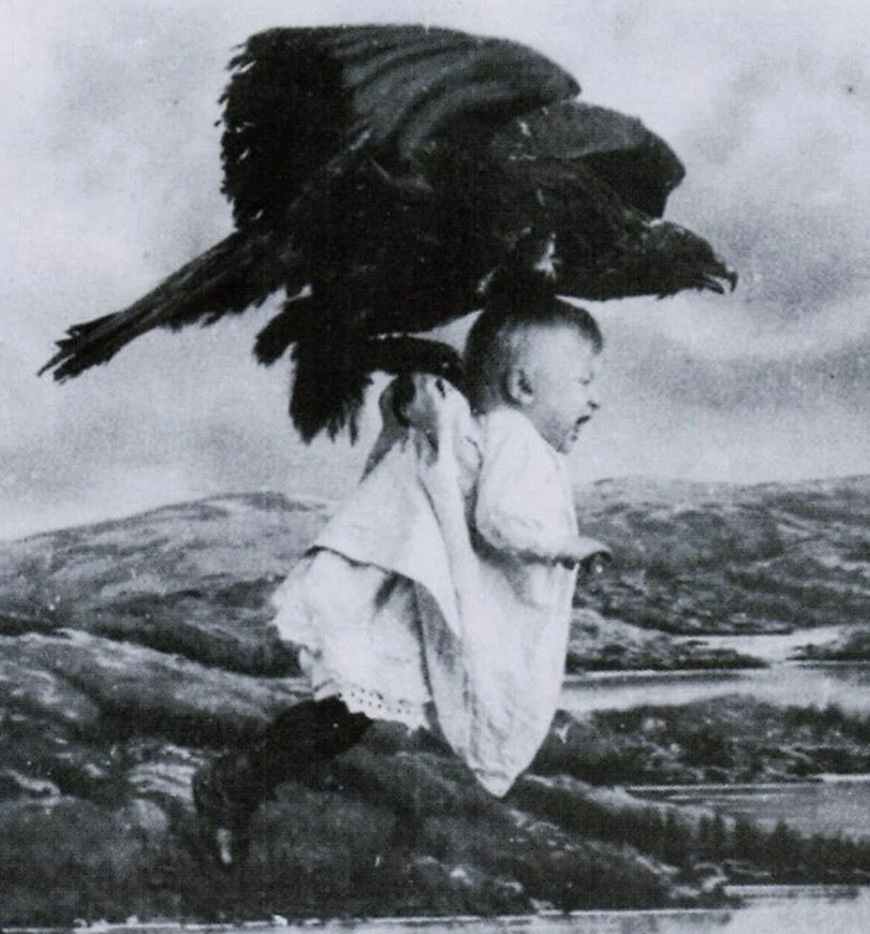
More rangers show up, one with a drone. A handheld viewfinder synced to the drone confirms it is Mandy’s son up in the tree. Finding a live child is a win, but the viewfinder flashes: “DO NOT DISTURB: Live Nest Signature Confirmed.”
“I don’t understand,” she says.
“Title 36 of the Code of Federal Regulations.” The drone pilot ranger sucks his teeth. “Tough call.”
“My son is endangered,” she screams.
A park ranger with three children of his own chirps into his radio: “Pine One, requesting climbers.” Then to Mandy: “What’s your son’s name?”
With the back of her hand, she stifles a vodka burp. His eyebrows furrow, not catching the name. She tries to spell it for the ranger, but the letters garble, and she punches him in the shoulder imploring him to do something.
A bit later, her son kicks one, two climbers in the face. Their safety harnesses swing into branches, cracking a rib, breaking an arm.
It hits the news. Her son is only the first. Posts flood in from across the country, from national parks: children wandering from tour groups, from families, getting up early from their tents, grabbing no supplies, and disappearing into the forest. Aerial reconnaissance reveals nests, thermal-imaging shows warm bodies in those nests.
The media calls it Adolescent Nesting Disorder. A lawyer on late-night invites Mandy to join a class action lawsuit against the National Park Service. Her social media feed suggests nesting support groups.
Worthless, she thinks.
Bills pass to begin logging in the parks, including Yellowstone and Redwood, thinning out the opportunities. All to save the children.
A breaking report fills her scrolling: the nesting children are now missing.
Reports of strange birds flying in organized patterns push the children from her feed. After mouthwash rinses the taste of vomit from her mouth, a podcast tells Mandy it’s okay when nature reclaims her young. This lightens her. She binges positive affirmations. Her favorite podcast says:
Revisit your trauma.
Put emotion back at the start.
Plant another seed.
Revisit. Reinvest. Rest.
Mandy bluffs her way back into the park, now closed. She recognizes the ranger, the father of three, who offers to escort her. Weathered memorial posters mark the trees of empty nests. The ranger triple checks her harness. After an arduous arboreal ascent, she settles gently down into the nest her son has built. The silence is disorienting. She grounds herself by rearranging twigs and sticks, shreds her socks for fluff and comfort, plugs holes, reconstructs the nest to accommodate her size.
Now sunset, Mandy does not heed the ranger’s admonishments, his job now in jeopardy. She passes time counting sticks. Thinks of the Rule of Thumb: children shall be disciplined by a stick no thicker than their thumb.
Despite the silence, enlightenment eludes her.
She climbs down.
Recording a podcast from home, she finds her voice. Outside her bay window, a phalanx of birds catches her eye. She tears off her headphones and springs out the door screaming her child’s name.
Her youngest son runs out, following her, “I’m here! I’m here!”
She realizes she’s been screaming the wrong name. In fact, she can’t name her first born.
Strange creatures flock to the Washington Monument, perching sideways like Brussels sprouts. Federal drones spray an untested chemical to burn them off. Parents insist these are their children. The USA scrambles a task force of birders and naturalists to capture and retrieve these birds for a nominal fee.
Mandy doesn’t have the money. She dumps her junk drawer on the floor looking for cash, change, her mother’s locket. A loose collection of one-month and six-month sobriety coins from useless support groups rattle on the kitchen tile. She digs through bills and then her credit card statements. She finds the one from the month they went camping.
The customer service rep informs her the return window for the sleeping bags is closed, but puts her on hold, giving her a spark of hope. While she paces, her youngest son offers her a glass of water. Polite and gentle, like his brother. She tells him to hush, then to shut up, then screams for him to be quiet.
She is on the phone.
Sobbing overtakes the boy. Her backhand smacks him across the head. He holds his throbbing ear, as he has done so many times. The ringing never stops.
Apologies flow from her mouth like quicksilver, but the boy wiggles from under her arms and disappears out the back door. She looks at him through the window, telling herself to give him space.
The little boy dries his eyes a final time, kicks off his shoes. His eyes follow the shoes’ trajectories. Beyond that, so high, another phalanx of creatures points like a compass needle to the west. He tracks them across the sky. Then his gaze drops. Lands on a stick.
Mandy, hand on the window, screams Daniel.
Daniel picks up the stick and keeps walking.
Gathers sticks, nothing thicker than his thumb.
The hummingbird in her chest returns, finds no nectar.
She runs behind her son.
Then in front of him.
Gathers sticks as well.
Then branches. Bigger, thicker.
Nesting material that will hold them both.
But when she turns back to him with an armful, he is gone.