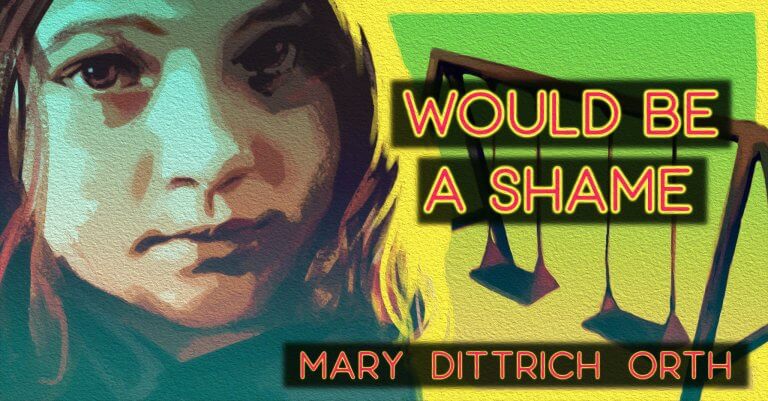
WOULD BE A SHAME by Mary Dittrich Orth
…we never even noticed a voyeur, Shana—a girl new to the school, friendless and odd—hiding behind the monkey bars, spying…
…we never even noticed a voyeur, Shana—a girl new to the school, friendless and odd—hiding behind the monkey bars, spying…
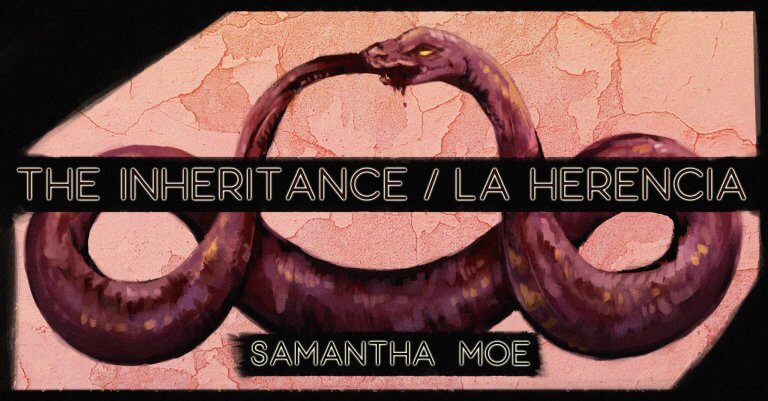
I think we’re all stuck to the Manhattan apartment, its thick coatings of paint intertwined with our veins, which crisscross around the city, glowing in the night, fraying when we argue.
The idea of chasing people into submission, trying to tame them as they run for their lives. Both the futility and cruelty of it.
Maybe we discuss how soft our wives’ hands are, how they look in the shower, how they may or may not love us.
No, son, I’m afraid you won’t grow up to be anything. You’re only a drawing, after all.
God shares my taller daughter’s name now. Which is Hope. I say it five times when she covers the inbound. Hope. Hope. Hope. Hope. Hope.
And says a warrior’s prayer as the mahogany bear carvings come alive. She understands the will of the Valkyrie as the will of the H bomb.

I’m sick’a feeling like I’m walkin’ through an eternal earthquake. I need some solid ground under me – just a little stability and peace.