
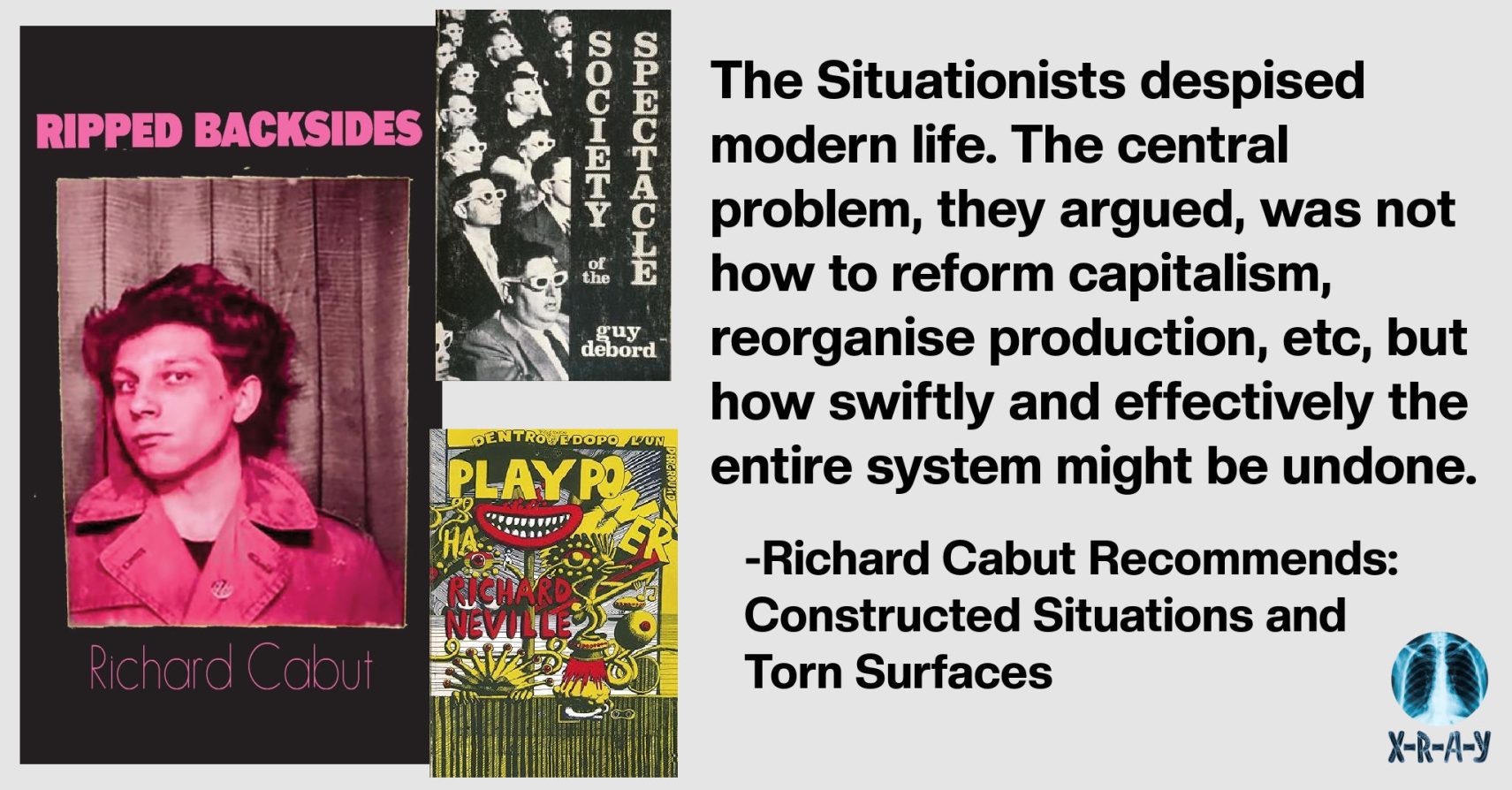
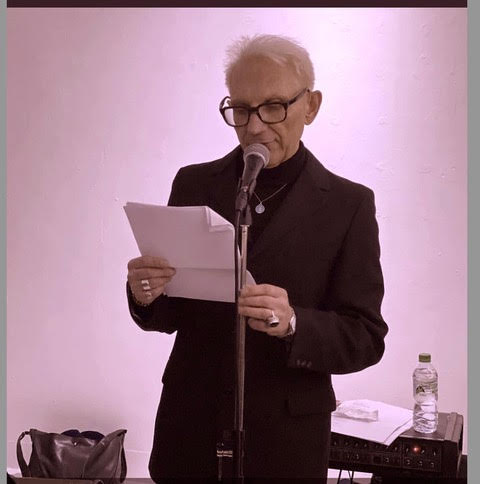
 We launched my current book Ripped Backsides: Postcards from Beneath the Pavement at Flux Lumina, an arts loft both luminous and dark, as well as fab, on the Bowery in NYC last summer.
As is the custom, I made a short introduction to the book, treating the cross section of subway-annotated-novel types, tote-bag literati, bookstore-event lurkers, Downtown creatives – no ironic moustache wearers to be seen unfortunately, but you can’t have everything – in other words a lovely crowd; my kind of people.
Ripped Backsides is a personal post-punk drift tracing ruined maps of the noir cities… A fragmentary situationist travelogue… A collection of psychogeographic glimpses into the ether … Postcards from beneath the cracked pavements of the cities’, well, ripped backsides. And to explain the book’s core idea and approach, I talked – rather engagingly I’m sure – about the importance of situationist convictions and notions.
Afterwards, some people told me they’d found the exposition valuable, and apparently not too dull. Others said they’d never heard of Situationism before. So, as a kind of recommendation, I’d like to elaborate a little here on the central part played by situationism both to my book and our understanding of the so-called culture industry and modern world.
Simply, the Situationists, or Situationist International (SI), were a radical group of artists, writers, and political theorists active mainly from 1957 to the early 1970s. They strongly influenced the May 1968 student uprisings in France (the book’s subtitle comes from the situ slogan ‘Beneath the pavement, the beach’ referring to the cobblestones that were torn from Parisian streets to throw at the CRS), and later punk culture and anti-capitalist movements. Their ultra-smart attacks on society during the 60s now seem strangely prophetic – and that in this respect, the message and meaning of the SI is entirely relevant.
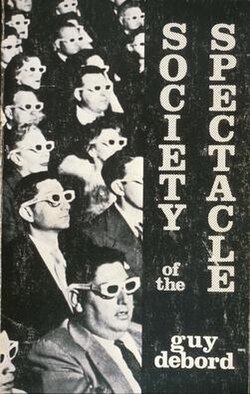 The Situationists diagnosed a shift from lived experience to passive observation. People, they argued, no longer live so much as watch their own lives being lived. Everyday life becomes a mediated substitute, stripped of purpose, affect, and authenticity. Individuals are estranged not only from what they produce but from themselves. As Guy Debord explained in The Society of the Spectacle, this alienation arises because reality is systematically displaced by representations. Mediated images that do not reflect life; they replace it. Social relations reorganize around appearances, and existence begins to resemble a permanent advertising campaign. Daily life becomes an economy of managed frustration and low-level aggression, focused on the accumulation of ‘dead gifts to self’: commodities drained of use, meaning, or vitality. The market and the sign collaborate seamlessly, and the horizon of possibility narrows to a single destination – consumption – until it seems there is nowhere left to go but the shops.
Modern society, they insisted, operates as a closed, self-correcting system. Through recuperation, dissent is absorbed, neutralized, and resold as style. Opposition becomes fashion; critique becomes content. The spectacle feeds on resistance, turning it into fresh images. Debord’s society functions like a cybernetic loop avant la lettre – a feedback system that endlessly processes inputs while foreclosing genuine change. Against this avalanche of unreality, situationist practice asserted a joyful refusal. Their Non! was directed at television culture, consumerism, alienated labour, and the sunlit holidays that promise escape while reinforcing boredom.
The Situationists despised modern life. The central problem, they argued, was not how to reform capitalism, reorganise production, etc, but how swiftly and effectively the entire system might be undone. Their demands were, famously, impossible – and entirely reasonable.
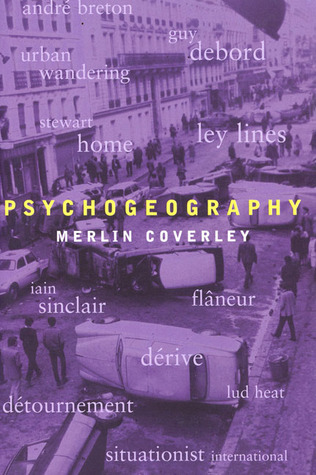
At the heart of situationist thought lies the dérive, or drift – a method of exploring urban spaces without predetermined purpose, allowing the psychological and emotional contours of the city to shape experience. The dérive challenges the predictability of capitalist life and encourages participants to encounter the city’s latent possibilities. For SI leader Debord, the flânerie was a deliberate disorientation to awaken awareness, reconnect with the world, and construct new situations. Merlin Coverley in Psychogeography, identifies its core elements: the political stance of opposition to the status quo, the exploration of urban landscapes, the profound effect of place on human behaviour and the quality of playfulness – something often overlooked and undervalued.
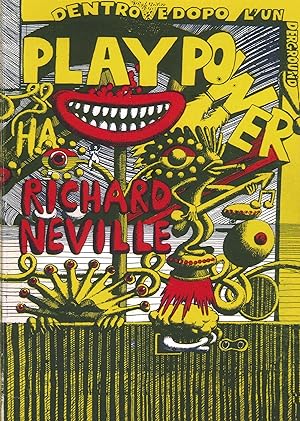 I can readily empathize with the spirit and core of cultural play. My own particular scene within the punk movement of the 70s and 80s was likely shaped more by someone like Richard Neville and his ‘Politics of Play’ than any heavy political tracts. In his 1970 book, Playpower, Neville stands aside from the straight Left. We got the memo. The straights were about working hard and supportively, while for us there was no wish to work at all. The straights wanted work for everyone/anyone (and these were times of mass unemployment) whereas we shrugged off the very thought of routine to focus on the exciting stuff, and somehow managed to get by.
We strutted our Billy-the-Kid sense of cool – bombsite kids clambering from the ruins – posing our way out of the surrounding dreariness. We were living in our own colorful movie (an early-ish Warhol flick some of us liked to think), which we were sure was incomparably richer, more spontaneous and far more magical than the depressing, collective black-and-white motionless picture that the conformists had to settle for. But we had a clear understanding of the here and now, and a desire to get out of it – rather than just get out of it. We cared with unflinching sincerity, although not many were intellectuals or activists in the traditional political sense.
More of interest in this sense, were, perhaps, the fantastic Situ slogans. ‘They said that oblivion was their ruling passion. They wanted to reinvent everything each day; to become the masters of their own lives.’ That kind of thing. And I don’t recall many people attending marches or ‘political’ meetings on a regular basis.
We were like kids (hence Playpower). I was positive that self-empowered, autodidactic, spiky guttersnipes were an upsurge of the future, certain to overcome the old political order – the RCP, the SWP, the stolid Left, the more traditional anarchists even.
Ripped Backsides situates itself within this framework. The book is a reflective dérive through cities I’ve visited – Berlin, LA, NYC, London, Warsaw, Tijuana, etc – unplanned, episodic wanders through streets, bars, and urban backwaters where memory, sensation, and imagination intersect. The narrative is deliberately shard-like, mirroring the situationist aim of disrupting linear, commodified experience. Just as the SI challenged spectatorship, the book invites readers to participate in constructing meaning, rather than passively consuming a story. The text functions as a psychogeographical map of urban consciousness, populated by fleeting encounters, discarded objects, and post-punk ephemera.
The Situationist ethos of revolt finds echoes in the punk movement, where figures like Jamie Reid and Malcolm McLaren translated critique into visual and performative interventions. Reid’s Sex Pistols artwork, from the anarchy-themed Union Flag to provocative record covers and adverts, embodies the SI’s belief that art and life should be inseparable and revolt both energetic and urgent. Punk, like Situationism, rejects nostalgia and codified cultural authority, asserting that meaning comes through engagement rather than passive consumption.
In Ripped Backsides, punk emerges not just as a cultural backdrop, but as a way of perceiving and interacting with the cultural and urban environment, informed by curiosity and desire – often with a knowing grin.
Jamie Reid’s later work, rooted in folklore and slow, deep change, exemplifies this approach: wry, unpretentious, and alive with possibility. In his hands, abstraction becomes a site of revelation.
 There is another pulse – the wilderness, the other. In Reid’s hands, this slice of magic becomes almost a constructed situation. Ripped Backsides’ episodic and referential structure mirrors this idea. Such moments, central to Situationist practice, are designed to challenge ordinary perception, provoke reflection, and produce authentic experience. Memory is scattered, dislocated, and tactile, echoing Debord’s observation that life under the spectacle erodes coherence. The text transforms the mundane into a site of discovery, reminiscent of the dérive’s curious urban exploration.
Minimalism and avant-garde music offer another lens through which to understand the book’s situationist sensibility. Brian Eno’s ambient work and Terry Riley’s minimalism emphasize a focus on atmosphere, pattern, and temporal evolution rather than narrative resolution. Similarly, Ripped Backsides uses fragmentation as a literary technique, presenting episodes as discrete yet interconnected, encouraging readers to inhabit each moment fully. It offers experience rather than prescription.
The book also navigates with the push and pull between focus and distraction. It’s common today to hear that our attention spans are shrinking, but the situationist approach suggests that how we pay attention has always depended on the moment we live in. In the 16th century, for example, readers often dipped in and out of books, picking out useful ideas or striking lines rather than reading straight through. Ripped Backsides works in a similar way, encouraging readers to move through its episodes out of order and to encounter the city and its past as a set of connected fragments. It’s meant to be read in bursts, echoing the dérive, and pushing back against the straight-line logic of traditional novels and the rigid timing of (capitalist) life.
For readers drawn to Situationist exploration in literature and art, Ripped Backsides can be complemented by a range of texts and practices that extend its themes of drift, memory, and countercultural critique. Some notable recommendations, aside from those already mentioned, include: Chris Marker, La Jetée – Temporal dislocation and memory as cinematic and narrative technique. Joe Brainard, I Remember – Episodic memoir emphasizing memory fragments. JG Ballard, What I Believe – Alienation, modernity, and inner landscapes. Brian Eno, Oblique Strategies – Procedural creativity and improvisation as a technique for exploring perception. Richard Cabut, Punk is Dead: Modernity Killed Every Night (yes, me again) – Intersections of punk, Situationism, and urban revolt. Fred Vermorel, Fashion and Perversity – Vermorel’s writing on Situationist theory, most notably in this Vivienne Westwood biog, is some of the most astute to be found anywhere. Via his ‘insider’s pique’ it details the sick-to-the-very-soul malaise at the heart of the Spectacle that, as Fred writes, ‘only took a slogan, a shifted perception, to turn this discontent into rebellion.’ Fred places punk as the ‘fashionable expression’ of that revolution. Walter Benjamin, The Arcades Project – Fragmentary exploration of urban modernity, spectacle, and memory. Brian Eno, Music for Airports – Music that foregrounds presence over narrative; ambient minimalism as experiential space. Terry Riley, In C: A Musical Adventure – Minimalism emphasizing pattern, repetition, and experiential listening – parallels narrative fragmentation. Steve Reich, Writings on Music – Minimalist manifesto on pattern, process, and perception. Philip Glass, Words Without Music – Autobiographical insights into minimalism and repetition as modes of experience.
These texts are amongst those that illuminate the Situationist project: understanding the spectacle, engaging urban/psychic space, and creating authentic moments.
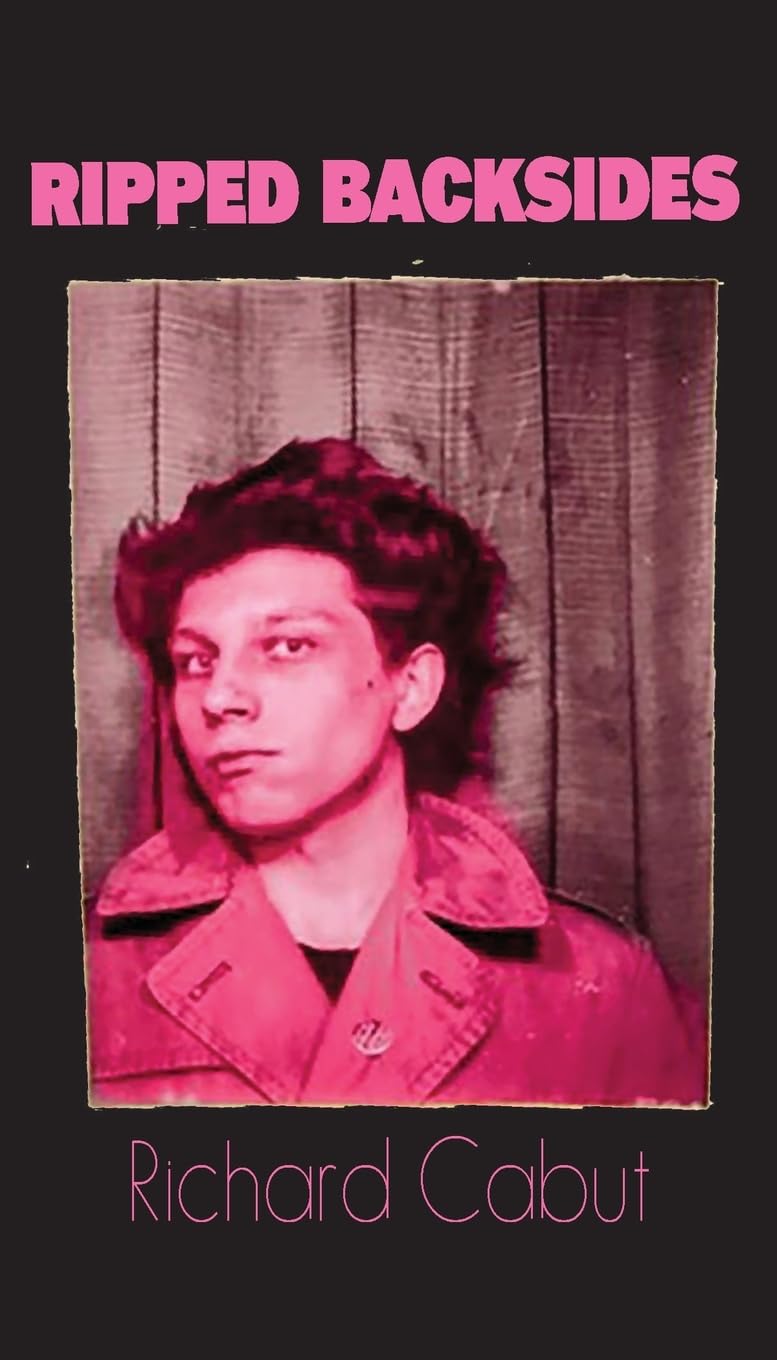 Ripped Backsides exemplifies how Situationist ideas continue to shape literary and artistic practice. By combining episodic storytelling, psychogeographic attention, and punk-inspired energy, the book constructs an immersive experience that challenges the reader’s expectations and invites imaginative, critical engagement. It demonstrates that Situationism is not merely a historical curiosity but a living method for negotiating modern life, memory, and urban space.
In the end, the book’s drift functions as both map and territory: a record of urban exploration, a meditation on memory, and a provocation to participate – artistically and otherwise. As Debord insisted, real life is elsewhere – but Ripped Backsides suggests that the elsewhere is accessible through attentive, spirited wandering, through engagement with the city and its fleeting moments of beauty and revelation. And, perhaps, in the process, we can reclaim a sense of the world that is both real and poetic.
Ripped Backsides is available worldwide at Far West Press or here: https://linktr.ee/richardcabut