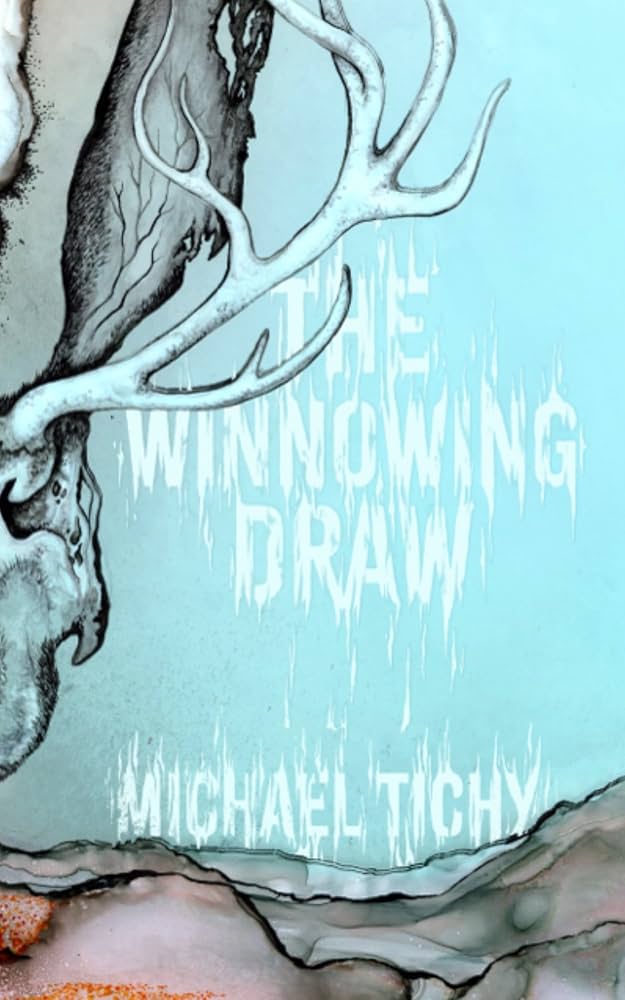
The Winnowing Draw by Michael Tichy (Castaigne Publishing, 2024)
“Keeping a fire alive is an act of vigilance. The darkness merely awaits.”
The Winnowing Draw is like Bone Tomahawk meets The Neverending Story, with beautiful language that really immerses you in the time period.
We are in 1880 where a poor teenager named Cecil is on the run after accidentally (or not so accidentally?) murdering his best friend, another boy, but from a privileged and prestigious background.
Meanwhile, a colonel, his kidnapped two-spirit guide, and his band of ragtag soldiers are on a hunt for American monsters. The wild west is not just a euphemism here. The unsettled parts of America are filled with actual monsters, and the cool part is that a lot of them are vaguely familiar, like Jackalopes, loch ness monster-type amphibious creatures, skunk apes, and what I think may have been a pack of metal-eating Pulgasari, or the American version anyway. The idea is that America needs to be cleared out for the Christian God-fearing pilgrims and homesteaders who intend to do the whole manifest destiny thing.
There is also a very interesting hitman that is going after Cecil, because the family of the rich dead child has paid for his bounty. This is my favorite character. He is weird. You think he is all slick and gangster and shit because he kills people really well, and stays in the freshest fits even though we are in the desert half the time, all John Wick-style, but whole time, he actually has the LAMEST mommy issues ever, and he is scared as hell by some things. I really liked that. How he was a conflicted figure and how we were allowed into his inner thoughts.
What makes this book special is what it did to me after reading. I was pressed to watch and read westerns and western-related stuff. I binged American Primevil. I watched Bone Tomahawk twice. I even tried to watch The Unforgiven but that shit was way too old and I don’t really do well with movies made before 1984. Sometimes a book is so good that you try to immerse yourself in the genre because you still crave more from that world. So you look for similar things, maybe read a book or watch a movie in the same genre and try to pretend it’s all new stories from the same universe. I know I do.
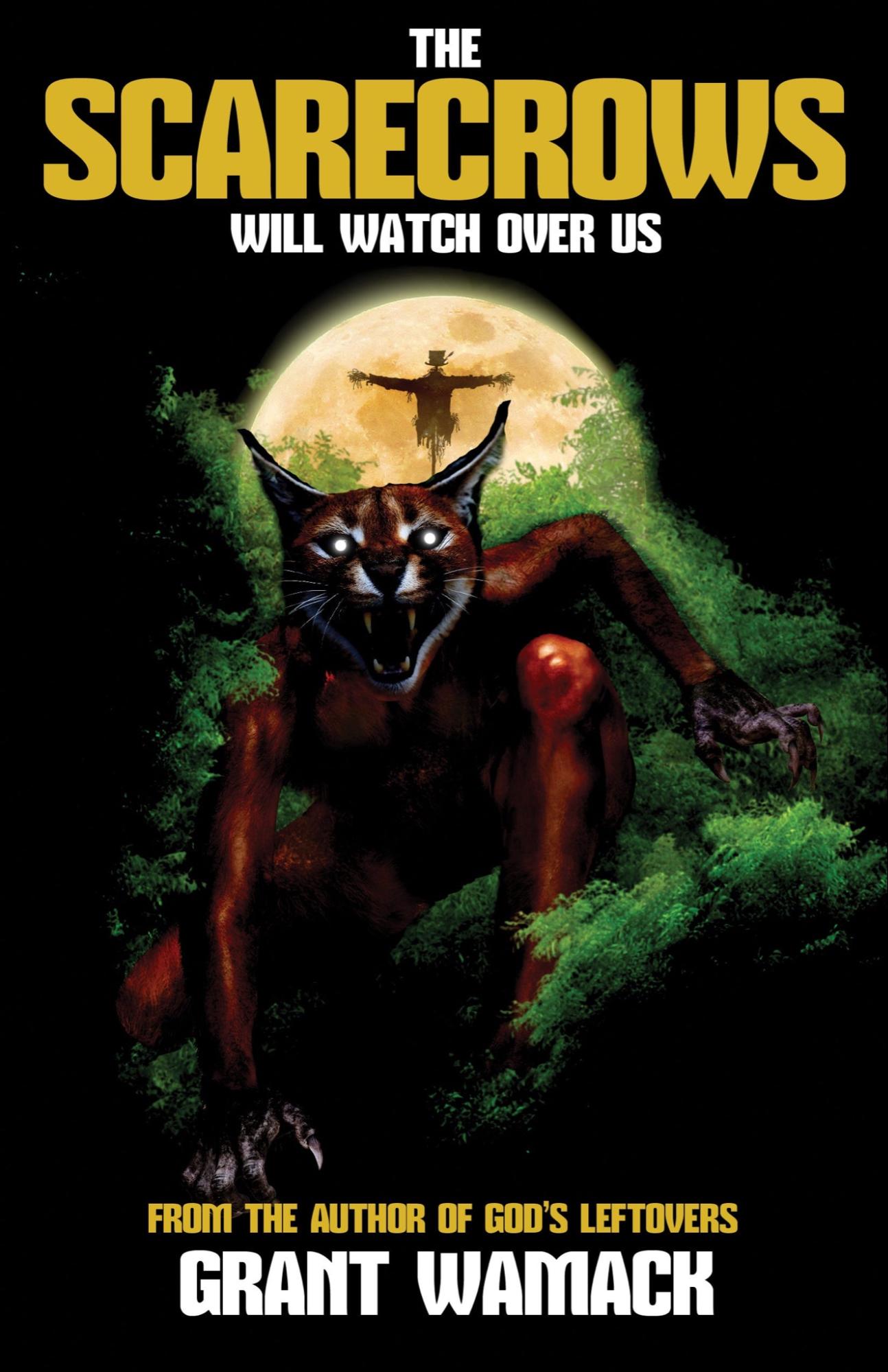
The Scarecrows Will Watch Over Us by Grant Wamack (Broken River Books, 2025)
Job interviews are stupid because they always ask you that boilerplate question one about what you think your weakness is. This is stupid because you’re definitely going to lie, because you need the job for important things, like eating food. At the very least, you’re going to choose the most innocuous thing possible. You might choose something like multitasking, something that you could potentially get better at. This is not so bad, because the implication is that you are really good at focused work and if you simply had a proper team, and everyone shared their required tasks, you would operate fine. You could say that you aren’t good at managing people which is totally cool if you are not applying for a management position. What you are not going to say, is that when your funds get low on a Friday from putting it all on the Ravens on DraftKings and FanDuel and none of your parlays play out, you steal a little money from the petty cash to buy yourself lunch for that day because you are starving and then you return the little bit of cash to the drawer the following Monday before anybody notices. You are not going to say that. There is NO WAY you are going to say that wild shit, even if that really is your greatest weakness.
If I was applying for a job with, let’s say X-Ray Lit, and they asked me this question, what my greatest weakness is, and I was being completely transparent, I could sum it up in two words: Sex Scenes.
Perhaps it’s my prude American sensibilities, how sex and nudity makes me cringe when I see it in a movie, but violence is completely acceptable. I recall my father taking me and a friend to the movie theater to see The Crow when we were eight-years-old. Like ten minutes into the movie he realized that it wasn’t appropriate for third graders. But it wasn’t the violence that bothered him. It was the scene where Top Dollar rolls over the naked dead woman, exposing her breasts. I recall my father reaching out, arms akimbo in panic, hands hovering over me and my buddy’s young, virgin eyes so we wouldn’t see those BIG-ASS TITTES! I remember him groaning and saying, “This was a bad idea.” I remember him being cool with the violence, but that one little bit of nudity made him feel like he was being a terrible father.
I’m the same way with my kids now. I can’t help it!
My 4-year-old and I have watched The Substance, that terrible Chucky series on Peacock, and all of the Alien and Predator movies. (She calls the xenomorphs “Fighters” and “Meanies” and after I give her a bath and wrap a towel around her, she balls her fists up together and holds them in front of her chest under her towel, and says, “Daddy, something is happening!” then opens her fists and wriggles her fingers, exploding open the bath towel, simulating the chest-bursting scene.)
I don’t feel like a bad father when I let her watch these movies.
EXCEPT when there is a sex scene, or anything remotely implying sex. In Alien 3 when it is alluded to multiple times that Ripley is in danger of being assaulted due to being in a remote all-male, prison planet, I feel gross inside and try to talk loudly over the dialogue. When we watched The Substance, I covered her eyes during the scenes where Margaret Qualley twerks and gyrates too aggressively for my liking. I’ve always wanted to show her Species, I mean what’s better for a little girl than a girl-boss-alien running around killing men and generally tearing shit up? But there’s no way I could ever do that. HELL NO. Natasha Henstridge is way too sexualized in that movie and her whole purpose is impregnating herself. It’s all about sex! The whole thing. Never mind the violence. That’s why I showed her all the Alien movies. Ripley never fucks. Not once in any of the movies.
Grant Wamack is a writer who does not have this problem. Since I first picked up one of his books, Black Gypsies, I’ve been impressed by his ability to write graphic and sexy sex scenes. Sometimes men will write sex scenes and use a word like “boobs” and ruin the whole thing. Like an 8th grade boy wrote that shit. Grant doesn’t seem to have that problem. And his sex scenes don’t read like they are written by a man. At least I don’t think so. That might be tough for me to be the judge on since I am a dude, but I have heard a lot of his female readers say the same thing. They genuinely enjoy the way this man writes sex.
In The Scarecrows Will Watch Over Us, Wamack turns the “Stay Out of the Scary Old House” trope on its ass and gives us a brand new cryptid to enjoy: bloodthirsty, fine-ass, cat-ladies. But not like, cat-ladies as in women that own a lot of cats and live in that house on the corner with the overgrown lawn that always smells like pee, but actual cat-ladies. He gives us twists and turns, and develops his characters in a way that makes us sad when some of them meet their fates, and elated when the ones we don’t like die especially gruesome deaths.
And the cat-ladies be fucking!
The Surrender of Man by Naomi Falk (Inside the Castle, 2025)
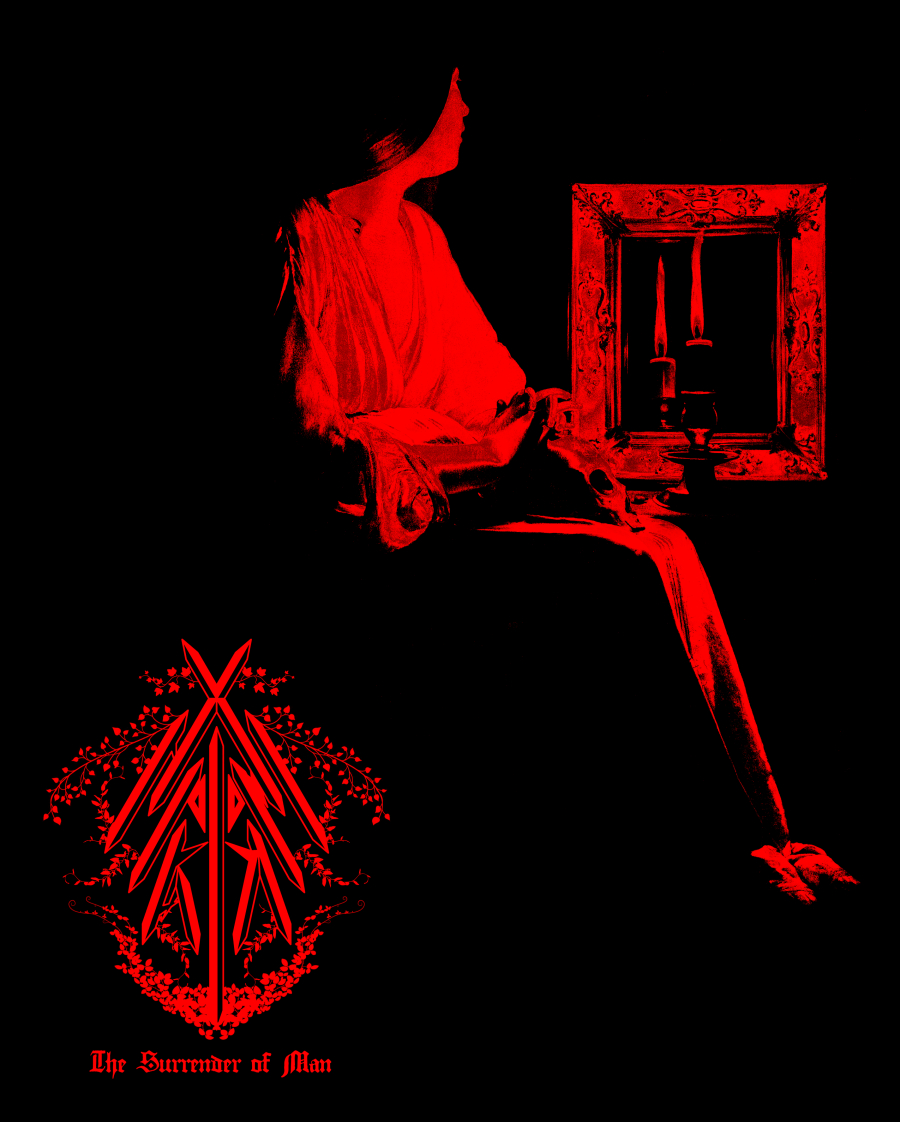
Language can be a very limiting medium when you are trying to describe something as abstract as the feeling art gives you. That’s like asking somebody to describe the color blue. How do you even do that?
Naomi Falk attempts to do this in The Surrender of Man, and I firmly believe she succeeds in what seems like an almost impossible task. I met Naomi in the West Village at the release party for issue 9 of Volume 0, a short story collection series that highlights the salacious, awkward, and taboo topics that don’t get talked about, along with the people unabashed enough to write about them.
At various times in my life, I have been called a “low-vibrational person” by people that used to like me but don’t like me anymore. But I don’t think that’s true. Low-vibrational people are spiritually negative and their actions are governed by fear and sadness and a general lack of enthusiasm for things. This is not me at all. I am very enthusiastic about things. But some of the things I get excited about are judged by others as low-quality or basic. Low-vibrational things. Like gas station sushi and 7-Eleven pizza. I could eat McDonalds for weeks and never complain. (McDouble, no pickles, no onions, add Mac sauce). I prefer rap music that focuses on selling drugs and killing people, and the moment I hear a rapper speaking on something conscious or uplifting I lose interest. I like all of the Terrifier movies and I think the new Tron movie was great because I would watch 2 hours of TV snow if Trent Reznor did the soundtrack. I like Applebees and their two for $25 deal. I like Golden Corral because my kids can scream and drop popcorn shrimp on the floor and nobody cares because the food is terrible and it’s crowded with church ladies in humongous hats and already very loud in there. I like James Patterson books and I think The Goldfinch is great. I like the Boris character because he sells drugs. I don’t like traveling or seeing new places. I don’t even really like leaving Baltimore. It doesn’t take much to make me happy.
I say that to say this; I don’t know much about criticism or memoir, or even how you define the difference between the two in a genre sense. If somebody talks about things that they didn’t make themselves, that’s criticism, I think? But if they start talking about themselves, their experiences, their life, that’s a memoir?
I know what I like.
I know that when I met Naomi Falk in NYC she had gold teeth like I do and her overall aesthetic seemed dark and goth and transgressive. This made me want to read what she writes. Because I DO judge a book by its cover. When I found out her book had been published by Inside the Castle, I immediately googled it to see what it was about. The cover got my attention immediately. All the black and red. And I couldn’t figure out exactly what was on the cover. But it made me want to read it. As I said, I am easy to please.
I often find myself drawn to art I don’t understand and I imagine the average reader of books published by Inside the Castle are the same way. Their books are like illegal contraband from another dimension. They are like open world video games without maps. The Surrender of Man is no different.
It seems that Naomi is just as interested in art that makes her feel miserable as art that makes her feel good. Like the pain is a feature rather than a bug. I don’t know if the art she showcases in the book is considered outsider art or if the pieces are well-known in the art world. I didn’t even know most of that world existed. There is a chapter in the book about a dude (Alexander Si) who makes a map by scrawling a rack of celebrity names on a wall and then attaches himself to the names with ropes and fasteners and electronic cables. After he’s got himself all tethered up, he turns around and attempts to yank himself free in what Naomi describes as a labor of destruction; a literal removal of what ties the artist down. This work is called Atlas and we learn a bit more about it and then Naomi casually mentions that Si ends up installing this art exhibit inside her Brooklyn apartment. Later on in the chapter, she describes Atlas as being a month-long exhibit for viewers to come experience.
How the fuck?
It’s been a couple weeks since I finished reading The Surrender of Man and I can’t stop thinking about this guy tethering himself to the wall with cables and then ripping himself free in Naomi’s Brooklyn apartment for a month straight. Because apartments in New York can’t be that big, right? It’s not like Baltimore—space is scarce there. So I’m just sitting here writing this and I’m still imagining that guy tearing shit up in a controlled and focused way for thirty days, Naomi making breakfast, folding laundry, and he’s just ripping ropes and cords out of her wall, drywall and shit flying all over her cereal.
If you are a fiction reader like myself and rarely explore nonfiction works but are interested in trying something new, The Surrender of Man is the perfect book to start with.