
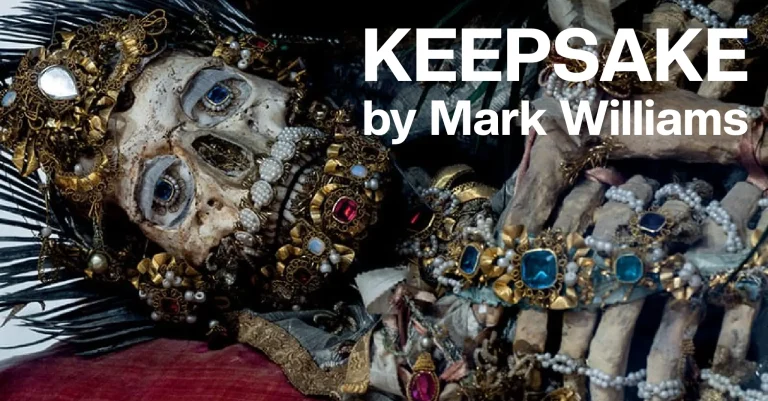
Keepsake by Mark Williams
I was nursing a beer at Hoosier’s Bar in Cooke City, Montana, when he walked in. Little guy, about my age. Mid-twenties. He had blond dreadlocks and a scruffy goatee. There were a few people sitting at tables, but except for me, the bar was empty. With a dozen-or-so stools to choose from, Dreadlocks sat two down from me. I’d been working on my beer for most of a Chiefs/Colts game. The fourth quarter was about to start. Until then, the only words I’d heard the bartender say were, “We’re out of that,” to the waitress and, “Drink up, we
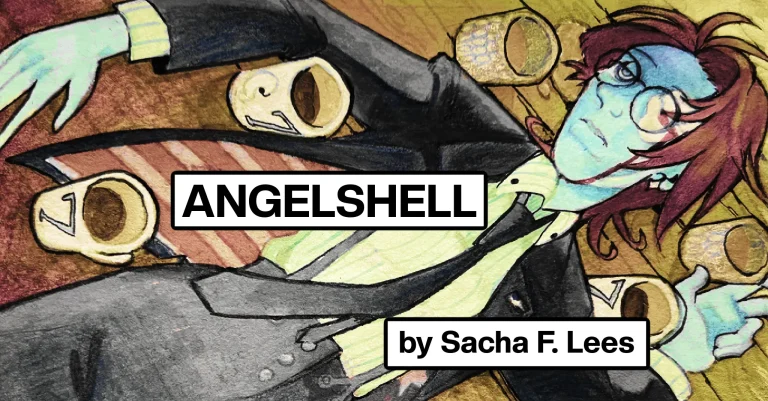
Angelshell by Sacha F. Lees
Bet you’re wondering, aren’t you, your eminence – how’d a broad like this even afford Tom Ford. Bespoke menswear. Real tailoring. You know, back in the glory days, when I still had my own body, it was this exact blend, this exact cut I had on when they swore me in. Hand to Gosh. I’ll be the first to admit, Mona’s a lot slimmer than I was, but you’re looking at a sixtyfive-year-old man in here. Have a heart, come on. I’m sorry she couldn’t be here to explain this herself. No respect for an exorcism. Not a Catholic, that
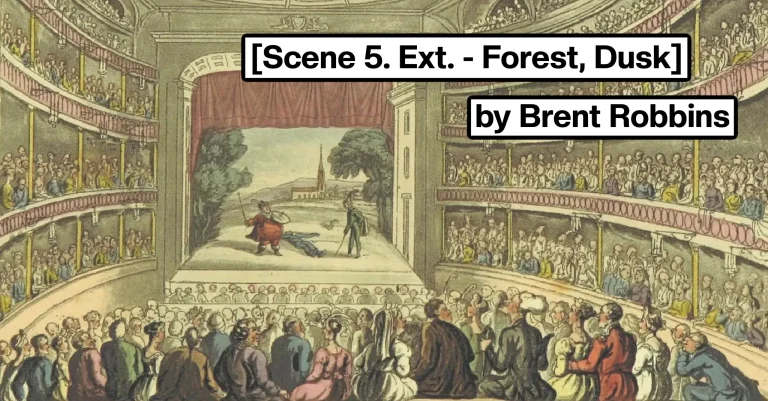
[Scene 5. Ext. – Forest, Dusk] by Brent Robbins
AUDIENCE settles in their seats as curtains rise. CECELIA enters from stage left and looks at the abomination of iron and rope fused to the catwalks the MANAGER jury-rigged from upstage to the mezzanine. Sunlight behind CECELIA fades through the tangle of pulleys, cranks, and gears above her. She lingers mid-stage for a beat too long. CECELIA: I swear, every day Father grows more cross. The shadow of a tower looms over CECELIA and AUDIENCE. The sunlight dies behind the horizon, but the shadow clings to CECELIA, as if trying to ease her transition into the dark. CECELIA: If he
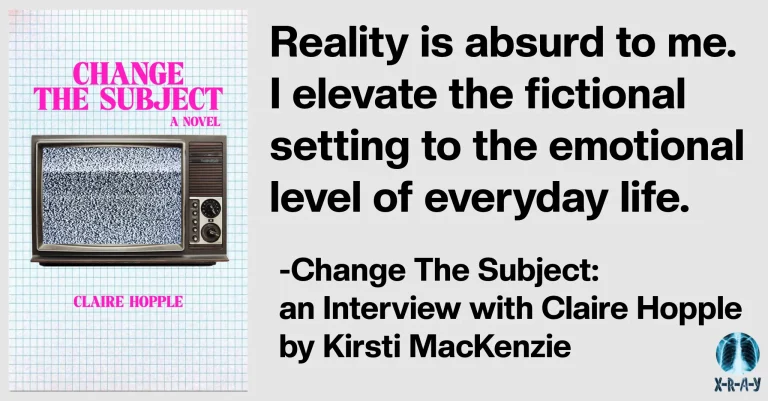
Change The Subject: an Interview with Claire Hopple by Kirsti MacKenzie
The older I get, the more I appreciate writers who leave a personal stamp on their work, so unmistakeable it couldn’t be anyone else on the page. Claire Hopple is one such author. Hopple’s absurdist, punny, tongue-in-cheek fiction has been a mainstay in indie lit for years. Few are as prolific as she is, and I’d know the cadence and tone of a Hopple story even in a blind read (the highest compliment I can give an author!) I was lucky enough to catch up with Claire and fire off a few questions about her latest novel, Change the Subject,
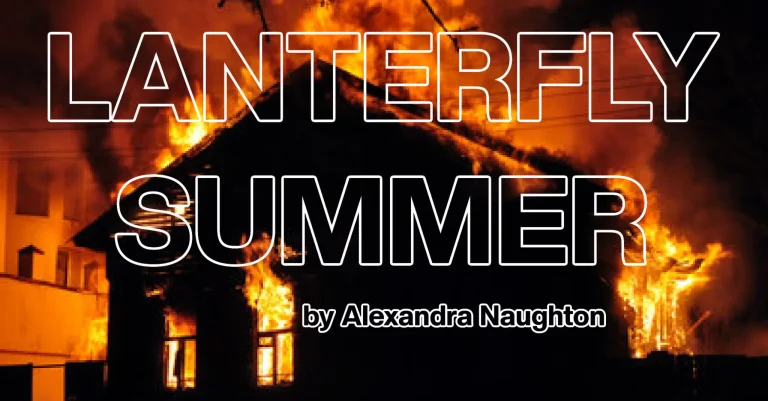
Lanternfly Summer by Alexandra Naughton
the lanternflies arrived the year before, on a cord of imported wood to a jobsite in berks county. within a month they had spread 100 miles in all directions. they lay their dried up bubblegum egg masses onto almost any surface (tree trunks, teslas, trash cans) and hatch to nymph to adult changing colors from black with white dots to red with white dots to ugly grey with wings that when spread show a beautiful pattern of white black and red. their favorite thing to eat is trees. they swarm and suck the sap and leave behind their honeydew, inviting
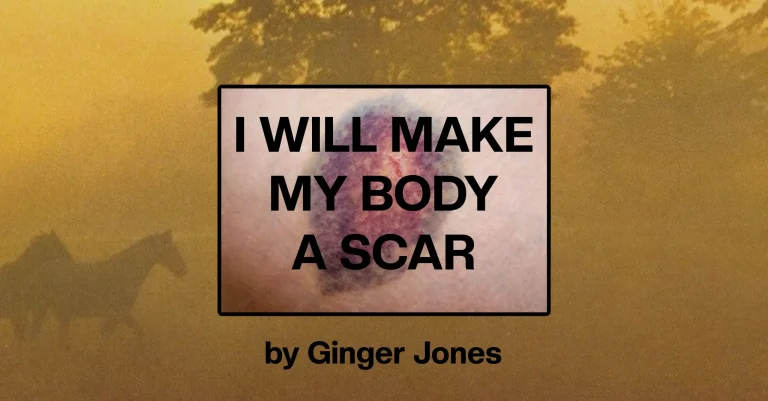
I Will Make My Body a Scar by Ginger Jones
All of my departures have introduced me to new versions of myself but I’m beginning to resent the idea that there is still so much left to become. I am hoping crossing borders will show me what love has yet to grant me: freedom. I arrive in New Mexico hoping to better acquaint myself with service and solitude, to become more discerning and lighthearted. The farm is in a town checkerboarded between reservations and gas stations. Everything here is brown and low to the ground. The adobe houses look like they have been pushed gently down into the earth by