
Mustawteneen. Every summer I visit Palestine, I learn new words. Some force their way to the forefront, defining the summer the way “songs of the summer” take hold of collective consciousness in America.
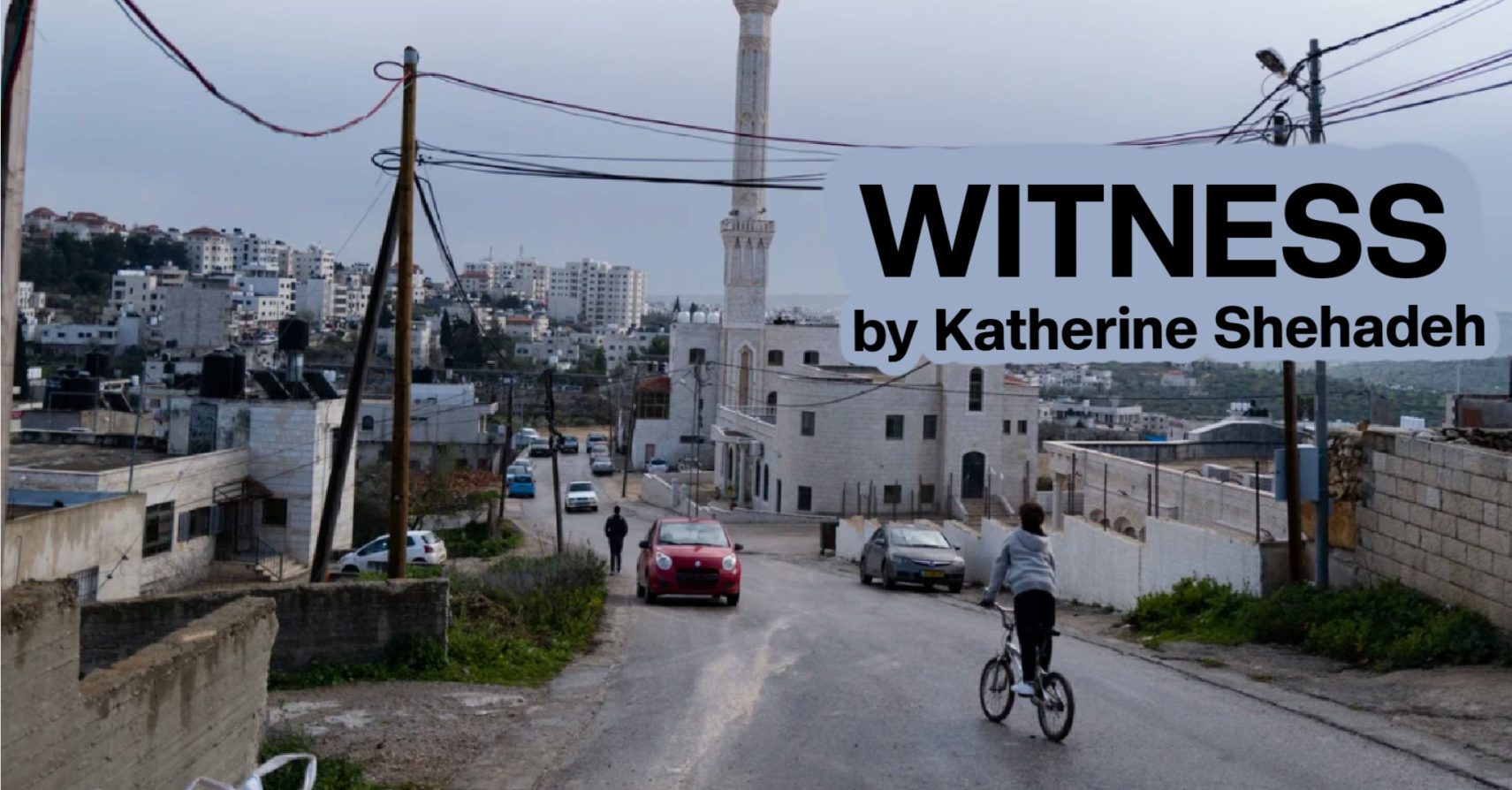
Wanting to put this summer’s defining words to paper while the ordeal is raw, I’ve moved outside to an overlooked corner of the home abutting an olive grove. Someone hammers at the metal shop across the street. It’s windy and hot, a typical August in Palestine. We’ve been in Silwad, a hillside village with a respectably-sized population of about 6,000, for four days.
Our first morning in, WhatsApp messages spread word of a local shahid. Often translated to English as martyr, the word can’t be separated from the context where it’s become a colloquial commonplace, much like the people who live and too frequently die in this land. I learned this word not here in Palestine but over the many months and deaths, watching families be blown apart on social media. Still, this isn’t the village’s first shahid, more precisely translated as witness. Far from it.
***
A man approaches the gate with what my city-mind thinks is a small tractor. Behind it, he pulls a cylindrical tank filled with water. I gather myself, moving back inside to avoid the noise and likely awkward interaction. The pump, now on full-blast, shoots water into plastic drums that sit atop the roof—a fixture in the West Bank—to ensure we have enough to bathe and wash dishes this week. My father-in-law’s arranged for the man to bring water from the tanks at his long-deceased mother’s home across the village. Taking from one tank, filling another. Apparently, the need is sufficient that businesses exist for this task.
Water restriction is one of several symptoms showing how the Occupation has steadily worsened over the decade I’ve been visiting. Having an old house, I know it’s easy to get desensitized to things but going and coming over long periods, changes here feel especially stark. Everything is off. Thursday and Friday, this week’s water days, coincided with the days the town was shut down following the death of a local father, the shahid, in a settler attack.
According to locals, the shahid’s brother called for his help when a group of settlers entered the edges of town after midnight, lighting fires laced with a chemical compound, possibly phosphorus, making them nearly impossible to extinguish. Khamis Ayyad, the forty-year-old husband and father of three, was gone before sunrise, presumably from a mix of smoke and chemical inhalation from the blaze.
Attacks like this, though uncommon, have happened in nearby villages at increasing frequency in recent years since the far-right coalition government, led by Netanyahu, has been joined by government ministers who are themselves settlers. Mustawteneen in Arabic, a word I first noticed this week, one I wish to wash from memory. Much like my hug with the Witness’s widow, whose eyes burned in my mind, her life appearing to have emptied with his.